 ultimate-guide
Aromatherapy Benefits for Home Environment
Table of Contents
- What Aromatherapy Is and How It Works in Your Home
- Mood, Stress Relief, and Emotional Well-Being
- Sleep Support and Creating a Relaxing Bedroom
- Focus, Concentration, and Productivity in Your Workspace
- How to Use Essential Oils in a Diffuser Safely
- Essential Oil Diffuser Safety and Best Practices
- Choosing Calming Scents for Home Rooms and Spaces
- How Long Should You Run an Essential Oil Diffuser
- Frequently Asked Questions
Last Updated: October 14, 2026
What Aromatherapy Is and How It Works in Your Home
Aromatherapy uses essential oils and plant-based scents to support emotional well-being and enhance your living space. At Keith Clark Collection, we understand that aromatherapy benefits for home environment extend far beyond pleasant fragrance, tapping into how scent influences mood, focus, and relaxation through psychological and physiological pathways.
When you diffuse essential oils in your home, volatile compounds enter the air and reach your olfactory system. Your nose detects these scent molecules and sends signals directly to the brain's limbic system, which governs emotion, memory, and stress response (Olfactory memory networks: from emotional learning to social behaviors). This direct neurological pathway explains why certain scents can shift how you feel almost immediately.
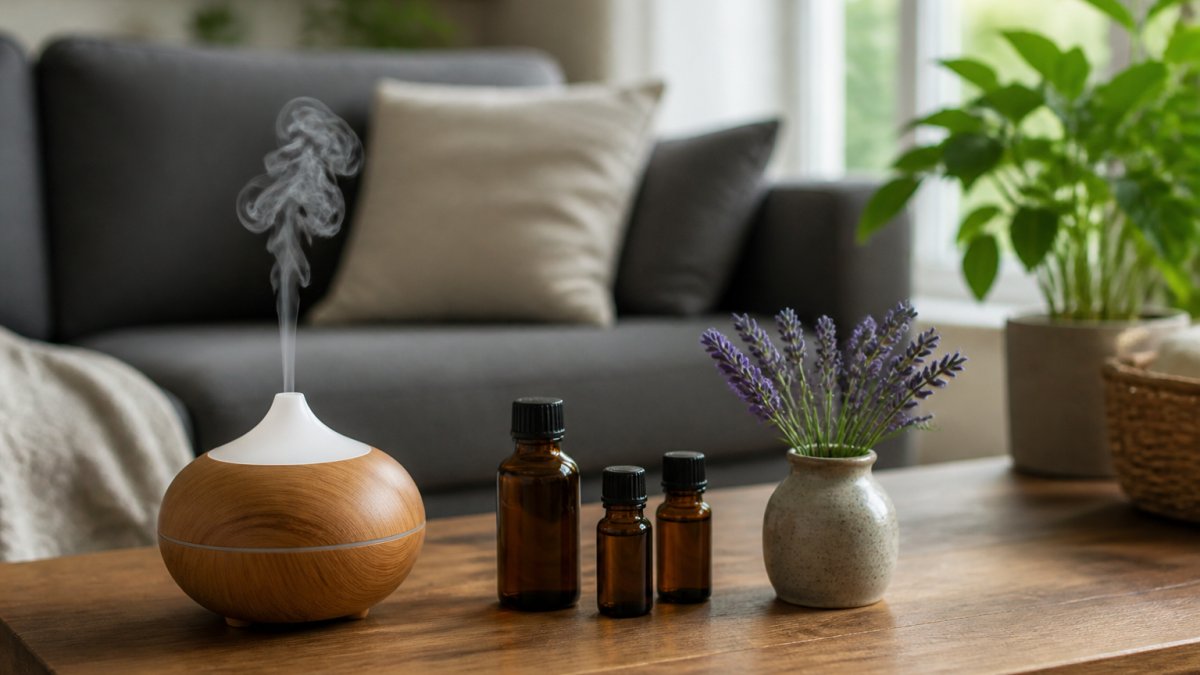
The key is consistency and proper application. A quality aroma diffuser disperses oils evenly, creating a sustained aromatic environment rather than a fleeting scent. Different oils carry different properties: some promote calm, others alertness, and many suit specific spaces.
Understanding aromatherapy benefits for home environment means recognizing that scent is not decoration but a tool: choose the right oils and use them thoughtfully to shape your space's emotional tone.
Mood, Stress Relief, and Emotional Well-Being
Aromatherapy's most immediate benefit is its effect on mood and stress. Introducing calming scents into your daily environment can noticeably shift your emotional state within minutes, and the mechanism is direct and measurable.
Certain oils are particularly effective for stress relief: lavender is used for grounding, bergamot for uplifting, and chamomile for ease. Diffusing them creates a home environment that actively supports emotional well-being.
Consistency matters. When your home smells intentionally calming every day, your nervous system associates that space with relaxation, so simply entering the room can trigger a calm response before you consciously notice the scent.
This is why room-by-room planning makes sense: each space serves a different purpose, and your aromatic environment should support it.
Sleep Support and Creating a Relaxing Bedroom
Sleep quality depends partly on your bedroom environment, and aromatherapy benefits for home environment in the bedroom are significant because scent directly influences sleep onset and quality.
A relaxing bedroom atmosphere begins with intentional scent choices. Lavender is the most researched oil for sleep, while chamomile and ylang ylang also promote restfulness. The goal is an aromatic environment that signals rest, not activity.
If you struggle with poor sleep, running a quality diffuser for 30 minutes before bed can prepare your nervous system for rest. The scent lingers in the air and on bedding, sustaining a calming atmosphere overnight.
The bedroom is the space you control most completely, making it ideal for experimenting with aromatherapy benefits for home environment if you're new to the practice.
Focus, Concentration, and Productivity in Your Workspace
Your workspace, whether a home office or desk corner, benefits from strategic aromatherapy: certain scents support focus and mental clarity.
Peppermint and rosemary are particularly effective for concentration and alertness, combating mental fatigue and supporting sustained focus. Diffusing them creates a workspace that actively supports cognitive performance.
Timing matters: running your diffuser during work hours and off during breaks creates an aromatic distinction between "focus time" and "rest time," helping your brain transition between modes.
A small, quiet diffuser transforms productivity without distraction: the scent becomes background support you don't think about, while concentration improves.
How to Use Essential Oils in a Diffuser Safely
Using essential oils safely in a diffuser comes down to three variables you control: how much oil, how long it runs, and how well the room breathes. Essential oils are concentrated plant compounds, not water, and they behave differently in a diffuser than a candle or a plug-in air freshener.
Dilution and dosing. Most diffusers use water as a carrier. A common starting point is 3 to 5 drops of essential oil per 100 milliliters of water. That produces a noticeable but moderate aromatic environment in an average room. More oil does not mean better results. Overuse is one of the most common causes of headaches, nausea, and throat or sinus irritation in people who are sensitive to fragrance.
Duration and exposure. Run your diffuser in sessions rather than continuously. A practical pattern is 30 to 60 minutes on, then a break of at least 30 minutes. Avoid running any diffuser for more than 2 to 3 hours at a stretch, even if the device allows it. Your sense of smell adapts to sustained exposure, so you stop noticing the scent while your body is still breathing it.
Ventilation is not optional. A diffuser adds fragrance to the air; it does not clean the air. It does not replace opening a window, running a kitchen or bathroom exhaust fan, or using a HEPA air purifier. If a room has no air exchange, oil vapor and fine mist can accumulate.
What not to do.
- Do not apply undiluted essential oil directly to skin. Carrier oil dilution is required for any topical use.
- Do not ingest essential oils. Many are toxic when swallowed, and some are hazardous in very small amounts.
- Do not diffuse in a sealed room with an infant, and avoid strong oils around young children.
- Do not diffuse around birds, cats, or pets with respiratory sensitivity without checking with a veterinarian first. Some oils, including certain citrus and tea tree products, are poorly tolerated by animals.
Start small. If you are new to a specific oil, diffuse it for 15 minutes in a well-ventilated room and see how you feel before committing to a longer session. Sensitivity varies widely from person to person, and the only reliable test is your own response.
Essential Oil Diffuser Safety and Best Practices
Several best practices keep diffuser use safe and effective long-term, starting with understanding diffuser types and maintenance.
Ultrasonic diffusers, the most common home type, use vibration to create a cool mist and are gentler than heat-based models, which can degrade oil compounds and pose burn risks. Nebulizing diffusers disperse pure oil without water, offering stronger scent but requiring more cleaning and monitoring.
Clean your diffuser regularly: oil residue builds up and can harbor mold and germs. Empty the tank after each use, wipe the interior weekly, and deep-clean monthly with white vinegar or the manufacturer's cleaner.
Never run a diffuser continuously for 24 hours. Cycle it 30 minutes on, 30 minutes off, or follow the manufacturer's schedule to prevent overexposure and extend device life.
Store essential oils in dark glass bottles away from sunlight and heat, out of reach of children and pets, to preserve potency.
Choosing Calming Scents for Home Rooms and Spaces
Most guides stop at "lavender for the bedroom, peppermint for the office." A more useful approach matches scent to the room's function, size, and who else shares it, the last factor is often why home aromatherapy gets abandoned.
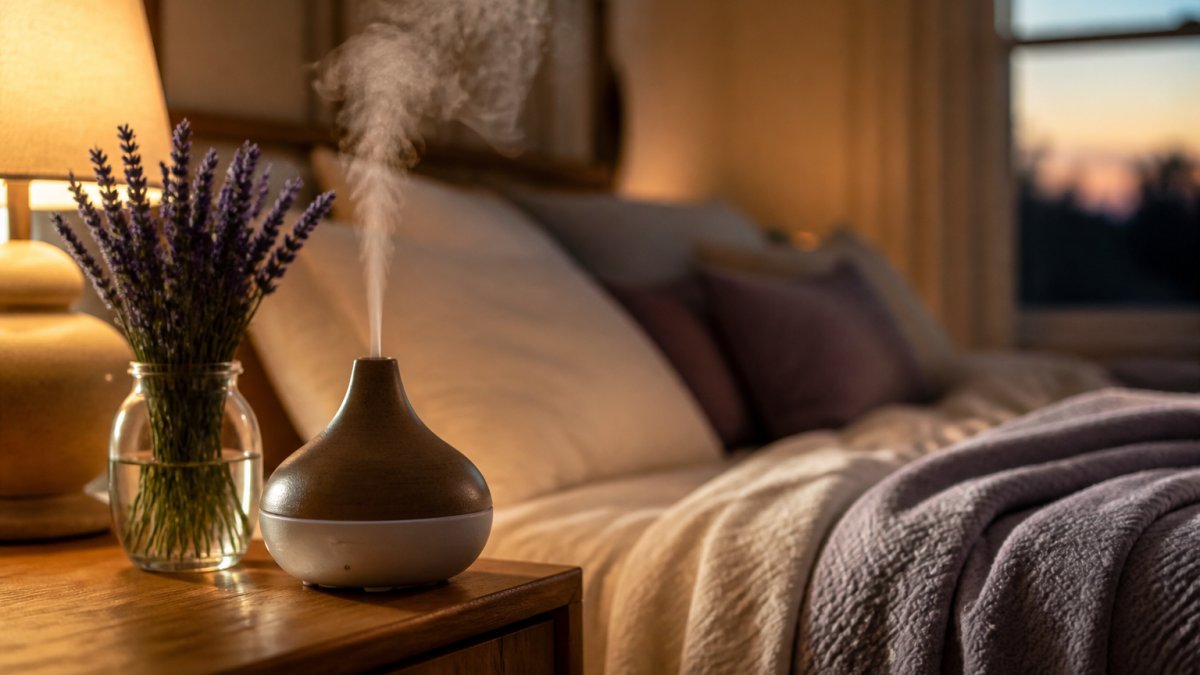
Bedrooms. The goal is a scent that lowers arousal without being heavy. Lavender is the most studied option, but chamomile, sandalwood, and vetiver also work well. Keep the dose low.
Home offices and workspaces. Here you want alertness without jitteriness. Peppermint and rosemary are the standard picks, and eucalyptus or lemon can work for people who find mint too sharp. Run the diffuser during focused blocks and turn it off during breaks.
Living rooms and shared spaces. This is where scent sensitivity matters most. A blend of lavender and bergamot, or chamomile and ylang ylang, gives a welcoming feel without sedation.
Bathrooms. Eucalyptus and peppermint pair naturally with a humid environment and support a clear-breathing feel during showers. Because bathrooms are small and often poorly ventilated, keep sessions short and run the exhaust fan.
Entryways and hallways. These transitional spaces benefit from lighter, brighter scents: citrus, bergamot, or a touch of rosemary. You want a brief impression, not a lingering cloud, since people pass through rather than sit in these areas.
A note on evidence. Aromatherapy research is mixed. Some oils, particularly lavender, have reasonable support for relaxation and sleep quality in small studies. Many other claims, including "purifying the air" or "boosting immunity," are not well supported.
Rotate your scents. Using the same oil every day in the same room leads to olfactory fatigue, where you stop registering the smell entirely.
How Long Should You Run an Essential Oil Diffuser
Duration matters: too long causes overexposure, too little limits benefits. The ideal schedule depends on room size, diffuser type, and personal sensitivity.
For most homes, 30 to 60 minutes per session is optimal, creating a noticeable aromatic environment without overwhelming the space. Many diffusers have timers that cycle 30 minutes on, 30 minutes off, preventing overexposure while maintaining consistent scent.
Room size affects duration: a 10x10 foot room may reach saturation in 15-20 minutes, while a 20x20 foot space may need 45-60 minutes.
Never run a diffuser continuously for more than 2-3 hours at a time, even if your device allows it. Your olfactory system adapts to sustained scent exposure, meaning you'll stop noticing the aroma even though it's still present. Taking breaks resets your scent perception and prevents habituation.
Pay attention to how you feel. If you develop a headache, nausea, or respiratory irritation, your diffuser is running too long or your oil concentration is too high. These are signals to reduce duration or dilution.
The most sustainable approach is to run your diffuser during specific times: mornings for energy-supporting oils, evenings for calming ones, and throughout your workday for focus-enhancing scents. This creates rhythm and prevents the scent fatigue that comes from constant exposure.
Creating a home environment that supports your emotional well-being starts with understanding how scent influences your space and your nervous system. Aromatherapy benefits for home environment are real, but they depend on thoughtful application, the right oils in the right rooms, used safely and consistently.
Frequently Asked Questions
How does aromatherapy help with emotional well-being?
Aromatherapy works by delivering aromatic compounds into your home environment through diffusion, inhalation, or topical application. When you inhale essential oil scents, they reach your olfactory system, which connects directly to the brain's limbic system, the region that processes emotions and memories. Certain scents like lavender, chamomile, and bergamot are traditionally associated with calming effects, while peppermint and rosemary may support mental clarity. While individual responses vary, many people report feeling more relaxed or focused when using aromatherapy in their living or working spaces.
How long should you run an essential oil diffuser?
Most diffusers work best with 30-minute to 1-hour sessions, though this depends on your diffuser type, room size, and personal preference. Continuous diffusion for 8+ hours can lead to scent fatigue, where you stop noticing the aroma, and may expose you to higher concentrations than necessary. A practical routine is to run your diffuser during morning hours for focus or evening hours before bed for relaxation. Always check your specific diffuser's manual for recommended operating times, and ensure good ventilation in your space to maintain healthy indoor air quality.
Are essential oils safe to use around children and pets?
Essential oils require careful handling around children and pets. Some oils can be toxic if ingested or applied directly to skin, and certain oils pose respiratory risks in poorly ventilated spaces. Never apply undiluted essential oils to a child's skin, and keep bottles out of reach. For diffusing, use lower concentrations, shorter sessions, and ensure the room has adequate ventilation. Pets are especially sensitive; oils like tea tree, eucalyptus, and citrus can harm cats and dogs. Always consult with a pediatrician or veterinarian before introducing aromatherapy around vulnerable household members, and choose products specifically formulated for families with children or pets.
Can aromatherapy improve indoor air quality?
Aromatherapy itself does not purify air or remove allergens, germs, or mold, that requires proper ventilation, air filtration, or specialized air purification systems. However, aromatherapy can freshen your home environment by introducing pleasant scents that mask odors and contribute to your perception of a cleaner space. Some essential oils like eucalyptus and tea tree have antimicrobial properties, but diffusing them is not a substitute for cleaning or proper HVAC maintenance. For genuine air quality improvement, combine aromatherapy with open windows, air filters, and regular cleaning. Think of aromatherapy as enhancing your home's sensory experience rather than replacing air quality management.