 comparison
Sagework Organics Alternative: Best Natural Skincare Picks
Table of Contents
- Why Shoppers Look for a Sagework Organics Alternative
- Quick Comparison: Natural Skincare Brands Worth Considering
- What a Skincare Brand Ingredient Comparison Actually Reveals
- Why Small-Batch Skincare Changes the Buying Decision
- Aromatherapy Skincare: Scent as a Functional Ingredient
- Matching a Sagework Organics Alternative to Your Skin and Goals
- Frequently Asked Questions
Last Updated: October 8, 2026
Why Shoppers Look for a Sagework Organics Alternative
Search interest in a Sagework Organics alternative keeps climbing, driven by shoppers who want natural skincare without the guesswork. At Keith Clark Collection, we hear the same questions daily: will this actually calm my skin, and can I trust what's in the jar? That's why we built this guide around one idea: the best natural skincare is judged by its ingredient list, not its marketing.
Most buyers comparing a Sagework Organics alternative get stuck on the same three things:
- Ingredient lists that hide behind "fragrance" or vague botanical blends
- Stated potency that never explains how much magnesium or which oils are inside
- Prices that jump the moment a brand earns a following
Here's what most guides miss. The brand name on the label matters far less than the formula inside it. Below, we break down what a real skincare brand ingredient comparison reveals, why small-batch production changes the buying decision, and how to match any product to your skin and goals.
Quick Comparison: Natural Skincare Brands Worth Considering
The first step in any honest comparison is naming what you're replacing. Sagework Organics is best known for its magnesium body butter, a whipped shea-and-coconut-oil base carrying magnesium and a lavender-forward scent. That single product defines the category shoppers are actually comparing, so every alternative below is judged on the same four axes: magnesium disclosure, base oils, scent source, and cost per ounce.
Most guides skip that last axis. Sticker price tells you almost nothing when one jar is 4 oz and another is 8 oz. The only fair number is cost per ounce, and you calculate it the same way every time:
- Divide the listed price by the net weight in ounces.
- Note whether the weight is net weight (product only) or gross weight (jar included).
- Re-check the price on the brand's own site, because third-party listings lag.
| Product Type | Typical Size | What to Verify | Best For |
|---|---|---|---|
| Whipped magnesium body butter | 4-8 oz jar | Magnesium form and amount per jar, base oils, scent source | Muscle comfort, deep moisture, evening routine |
| Magnesium lotion | 8-16 oz bottle | Whether magnesium is listed by amount or only as "proprietary blend" | Larger coverage area, lighter feel |
| Magnesium cream | 2-4 oz jar | Carrier oils, preservative system, fragrance disclosure | Targeted application on joints |
| Fragrance-free magnesium balm | 2-4 oz tin | Full ingredient list with no "fragrance" or "parfum" | Reactive or sensitive skin |
A few practical notes on reading that table:
- Magnesium form matters. Magnesium chloride and magnesium sulfate are the common topical forms; magnesium oil is a brine, not an oil. Labels that name the form and the amount are more useful than labels that only say "magnesium."
- Concentration is not standardized. One brand may list milligrams per jar, another may list a percentage, and a third may disclose nothing. Do not treat those numbers as equivalent, convert to a per-ounce figure before comparing.
- Scent source is a filter, not a preference. Essential-oil blends and synthetic fragrance oils behave differently on reactive skin, so treat them as separate categories.
- Small-batch brands sell out. If a specific scent is the reason you're buying, confirm current stock before you commit to a routine.
What a Skincare Brand Ingredient Comparison Actually Reveals
A skincare brand ingredient comparison reveals more about performance than any label claim, but only if you read it in the right order. Ingredients appear by weight, so the first five entries tell you what the product actually is: a water-based lotion, an oil-and-butter balm, or something in between.
Start with the base, then work down to the actives:
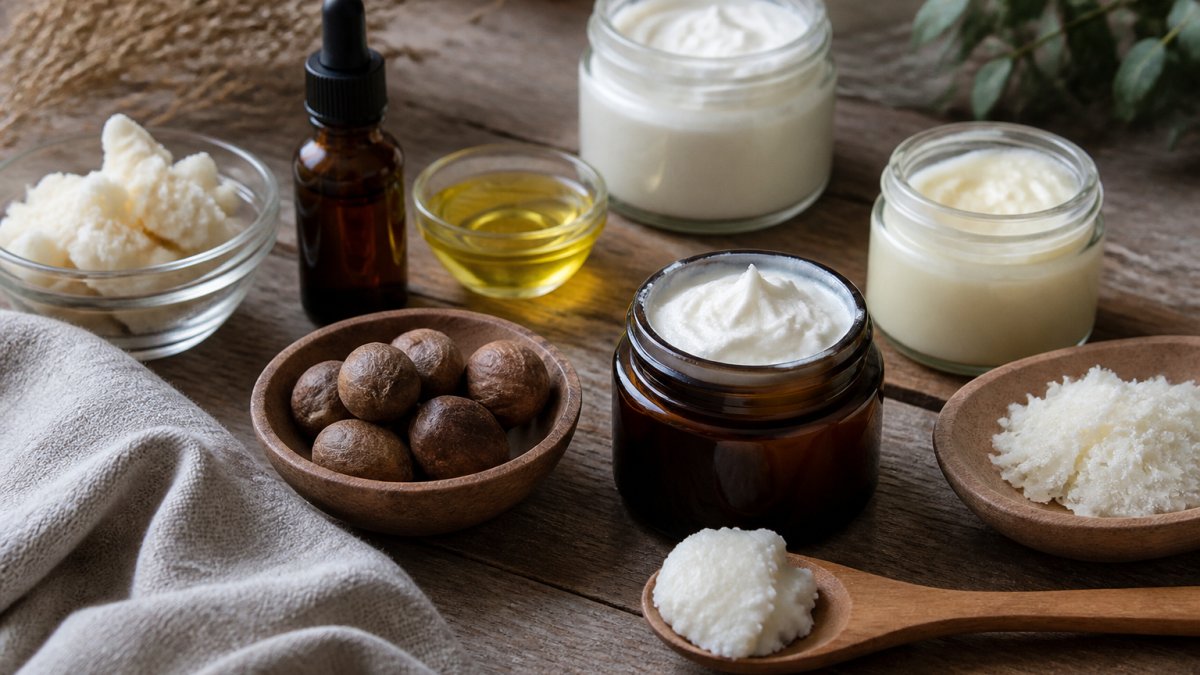
- Coconut oil, shea butter, and cocoa butter near the top signal a rich, occlusive moisturizer.
- Aloe and glycerin point to hydration rather than heavy occlusion.
- Arnica and magnesium indicate a product aimed at muscle relief and post-activity use.
- Lavender and other essential oils indicate an aromatherapy intent.
- "Fragrance" or "parfum" without a named source is the term that should make you pause.
The FDA's guidance on cosmetic labeling explains that ingredients must be listed in descending order of predominance, which is why position matters. An ingredient listed after the preservative is present in trace amounts, not as a hero component.
Comparing magnesium on a like-for-like basis
This is where most comparisons fall apart. Labels disclose magnesium in at least three different ways, and they are not interchangeable:
- Milligrams per jar, useful only if you also know the jar size.
- Percentage by weight, useful only if you know whether it refers to the compound or the elemental magnesium.
- "Magnesium blend" with no number, not comparable to anything.
To compare fairly, convert everything to milligrams per ounce. If a label gives milligrams per jar, divide by the net weight in ounces. If it gives a percentage, multiply by the net weight in grams and convert. If it gives nothing, treat that as a disclosure gap rather than a low dose, you simply don't know.
What topical magnesium can and cannot do
Topical magnesium is popular for muscle comfort and relaxation, and many users report a warming or calming sensation after application. What the evidence supports is narrower than the marketing suggests: magnesium is not absorbed through the skin as readily as it is through the digestive tract, and the research on topical absorption is mixed. That doesn't make the product useless, the massage action, the occlusive base, and the scent all do real work, but it does mean you should treat "magnesium" on a label as one part of the formula, not a guaranteed pharmacological effect. If you have a medical reason to raise your magnesium levels, that's a conversation with a clinician, not a body-butter decision.
Screening for sensitive skin
Reactive skin is the most common reason shoppers abandon a product mid-jar. A short screening routine catches most problems before they start:
- Patch test on the inner forearm for 24 hours before applying anywhere else.
- Prefer fragrance-free formulas if you've reacted to scented products before.
- Watch for essential oils high in known irritants, such as cinnamon, clove, and citrus peel.
- Introduce one new product at a time so you can identify the culprit.
Why Small-Batch Skincare Changes the Buying Decision
Small-batch skincare changes the buying decision because batch size affects freshness, consistency, and how closely a maker can watch quality.
That's the model we use at Keith Clark Collection. Every product is handmade in small batches using plant-based ingredients and therapeutic botanicals, so the person making it understands how it's meant to be used on the body, not just how it's supposed to look on a shelf.
The trade-off is real. Small-batch production means limited inventory and slight natural variation between batches. If you need identical texture from jar to jar with zero variation, that's a fair reason to look elsewhere.
Aromatherapy Skincare: Scent as a Functional Ingredient
Aromatherapy skincare treats scent as a functional ingredient, not decoration. Lavender, for example, is chosen for its calming profile, while citrus-forward blends are picked to lift mood. The scent does work alongside the moisturizing base.
When evaluating a Sagework Organics alternative, ask what the scent is doing. A product built around relaxation and sleep support will lean on soft, grounding notes. One aimed at muscle tension and post-activity recovery often pairs arnica or magnesium with a warming or cooling scent.
Shoppers who want results without scent aren't left out. Unscented and fragrance-free options exist for people who react to essential oils or simply prefer no scent at all. Neither choice is better; they serve different needs.
Matching a Sagework Organics Alternative to Your Skin and Goals
Use this framework:
- Need deep moisture and silky skin? Prioritize coconut oil, shea butter, and cocoa butter near the top of the list.
- Need muscle relief after activity? Look for arnica, magnesium, or warming botanicals.
- Need relaxation and sleep support? Choose lavender or other calming essential oils.
- Have sensitive skin? Start with fragrance-free formulas and patch test first.
- Buying for kids? Choose gentle, plant-based formulas and test on a small area first.
For shoppers who want all of this in one place, Keith Clark Collection offers aromatherapy-powered skincare, body care, and home scents made in small batches by a licensed massage therapist.
One honest limitation: because everything is made in small batches, popular scents can sell out, and you won't find the same year-round inventory a mass retailer carries.
American Academy of Dermatology's guidance on sensitive skin recommends testing new products on a small area before full use, especially for children and anyone with a history of reactions.
If you're weighing a Sagework Organics alternative against a drugstore option, remember that a lower price per ounce often means more filler and less active botanical. Compare what's actually in the jar.
Choosing a Sagework Organics alternative is really a question of trust: trust in the ingredient list, the maker, and the batch in your hand.
Frequently Asked Questions
What brands are similar to Sagework Organics?
Shoppers comparing options often look at brands with a similar natural or plant-based positioning. Keith Clark Collection stands out because its body care and home scents are handmade in small batches by a licensed massage therapist, using plant-based ingredients and therapeutic botanicals. Other names that surface in comparisons often focus mainly on makeup rather than the bath, body, and home-scent range Sagework Organics is known for.
What should I compare when choosing a natural skincare brand?
Start with the ingredient list, not the front label. Look at how far up the list carrier oils, shea butter, and cocoa butter appear, since ingredients are listed by weight. Check whether the formula is fragrance-free or uses essential oils, and whether the brand states its magnesium or active concentration on a comparable basis. Price per ounce matters too, because a larger jar at a higher upfront cost can be cheaper per use than a small one.
How do I check the ingredients in a skincare product?
Read the full INCI list on the jar or product page, not just the marketing claims. Ingredients appear in descending order by weight, so anything listed after the preservative is present in tiny amounts. Cross-check for known irritants if you have sensitive skin, and patch test on your inner forearm for 24 hours before applying to larger areas. Brands that publish complete lists, including scent components, make this comparison far easier.
Is aromatherapy skincare suitable for everyday use?
Yes, for most people. Aromatherapy skincare pairs plant-based moisturizers with essential oils like lavender, so it works as a daily body lotion while adding a scent experience. If your skin is reactive, choose unscented or fragrance-free versions and patch test first. Anyone with a diagnosed skin condition should check with a dermatologist before adding essential-oil products to a daily routine.
What should I consider before switching skincare brands?
Introduce one product at a time so you can tell what is working. Confirm the new brand's ingredient list matches your skin's tolerances, and compare cost per ounce rather than jar price alone. If muscle relief or sleep support is your goal, look for brands that state their magnesium content clearly. Finally, check customer reviews from people with skin similar to yours before committing to a full routine.