 blog
blog
Artisanal Body Care for Dry Skin: A Complete Guide
Table of Contents
- Why Artisanal Body Care Works for Dry Skin
- Best Body Butter for Dry Skin: What Sets Artisanal Options Apart
- Building a Dry Skin Body Care Routine That Actually Works
- Plant-Based Ingredients That Heal Dry Skin
- Ingredients to Avoid for Sensitive Skin
- Fragrance, Allergens, and Safe Choices for Reactive Skin
- How to Evaluate Artisanal Formulations and Quality
- Seasonal and Environmental Adjustments for Dry Skin
- Frequently Asked Questions
Last Updated: October 11, 2026
Why Artisanal Body Care Works for Dry Skin
Artisanal body care for dry skin addresses what mass-produced moisturizers miss: dry skin is reactive, sensitive, and depleted of lipids that retain moisture. Small-batch products with quality plant-based ingredients work differently because they're designed with that complexity in mind.
Mass-market lotions use silicones and lightweight emulsifiers that feel good temporarily but don't repair barrier damage. Artisanal body care for dry skin includes deeper emollients, therapeutic botanicals, and aromatherapy components. Keith Clark Collection's formulations, created by a licensed massage therapist, bring expertise in how skin responds to sustained moisture and touch.
Small-batch production allows higher concentrations of active ingredients without fillers that dilute potency in commercial runs. You're paying for precision, not packaging.
Best Body Butter for Dry Skin: What Sets Artisanal Options Apart
The best body butter for dry skin has ingredient integrity, consistent texture, and therapeutic botanicals that work, not just feel luxurious.
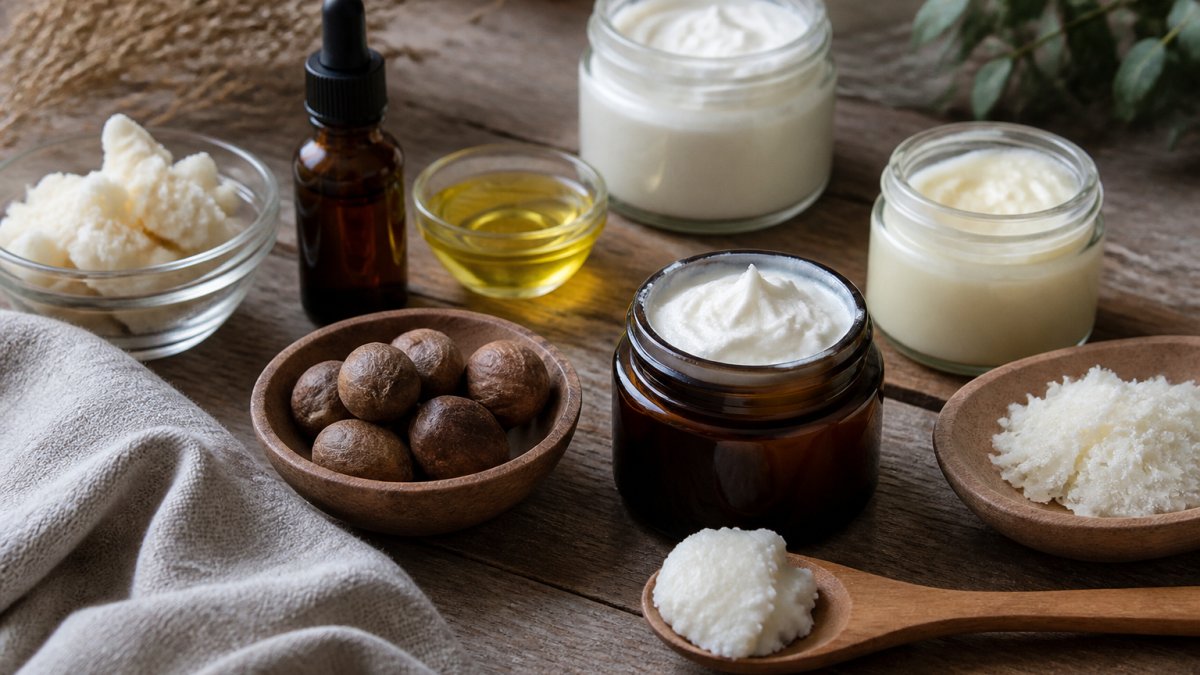
A quality body butter sinks into skin by balancing heavier butters (shea, cocoa) with lighter plant oils. Keith Clark Collection's handmade formulations are tested for absorption, scent, and skin response before release.
Look for specific plant oils and butters in the first five ingredients, not vague terms like "fragrance." The best body butter for dry skin includes aloe for hydration and therapeutic botanicals for aromatherapy support.
Artisanal body butters cost more due to small-batch production and hand-blending, but deliver deeper hydration and skin that feels nourished rather than coated.
Building a Dry Skin Body Care Routine That Actually Works
A dry skin body care routine is a three-step sequence: gentle cleansing, timed moisturizing, and layering for cumulative hydration. Most people skip this structure and wonder why their skin stays dry.
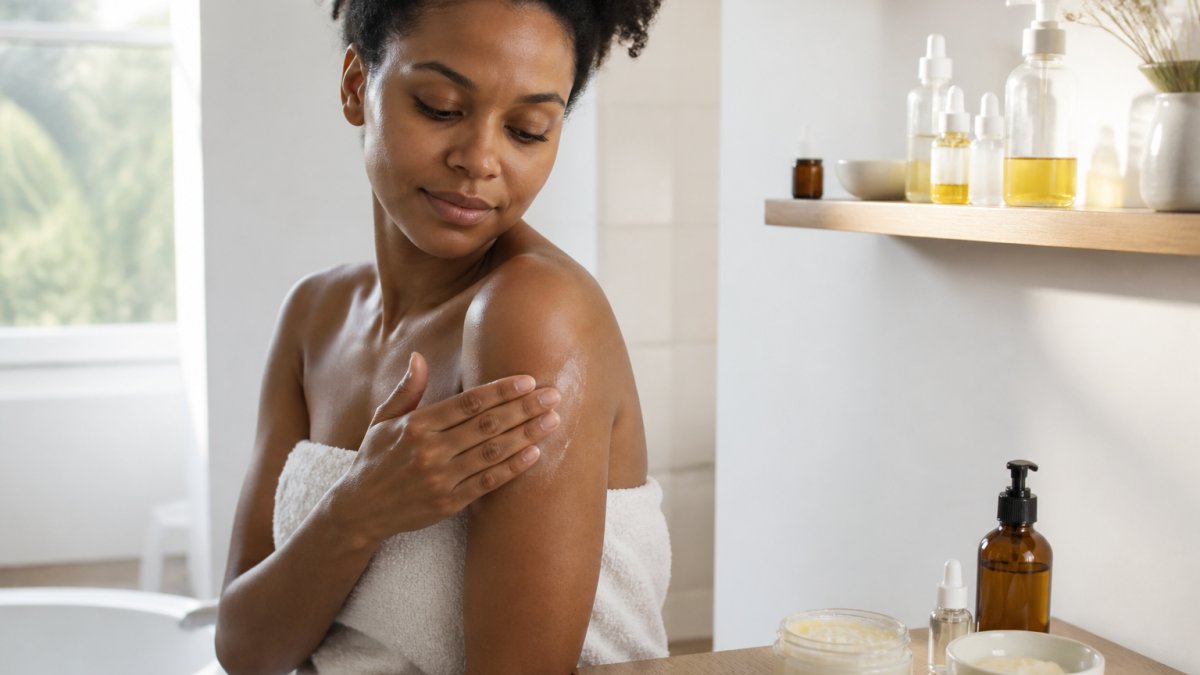
Step 1: Gentle Cleansing with Body Wash
Start with a body wash formulated for sensitive skin. Harsh sulfates strip natural oils and worsen dryness before moisturizer is applied. A gentle wash removes dirt without triggering inflammation.
Look for sulfate-free body wash with plant-based agents like aloe and glycerin. Your skin should feel clean but not tight; squeaky-clean indicates over-stripping.
Use lukewarm water, not hot. Hot water increases water loss from skin.
Step 2: How to Moisturize Dry Skin After a Shower
Apply body butter within three minutes of showering, while skin is still damp. Water molecules help carry emollients deeper into the skin barrier.
Apply body butter in upward strokes from feet toward heart using gentle, deliberate pressure. This supports circulation and even coverage.
Use generous application, aim for visible coverage that takes 2-3 minutes to absorb. Thin layers won't provide lasting hydration.
Step 3: Layering for Deep Hydration
Layer for deeper hydration: apply body butter, wait five minutes, then apply a lighter oil or lotion. This traps moisture more effectively than single application.
Layering extends scent and therapeutic benefits throughout the day.
In winter or dry climates, add a body oil layer before body butter for maximum moisture retention.
Plant-Based Ingredients That Heal Dry Skin
Plant-based ingredients contain natural emollients, humectants, and anti-inflammatory compounds that address multiple aspects of dry skin.
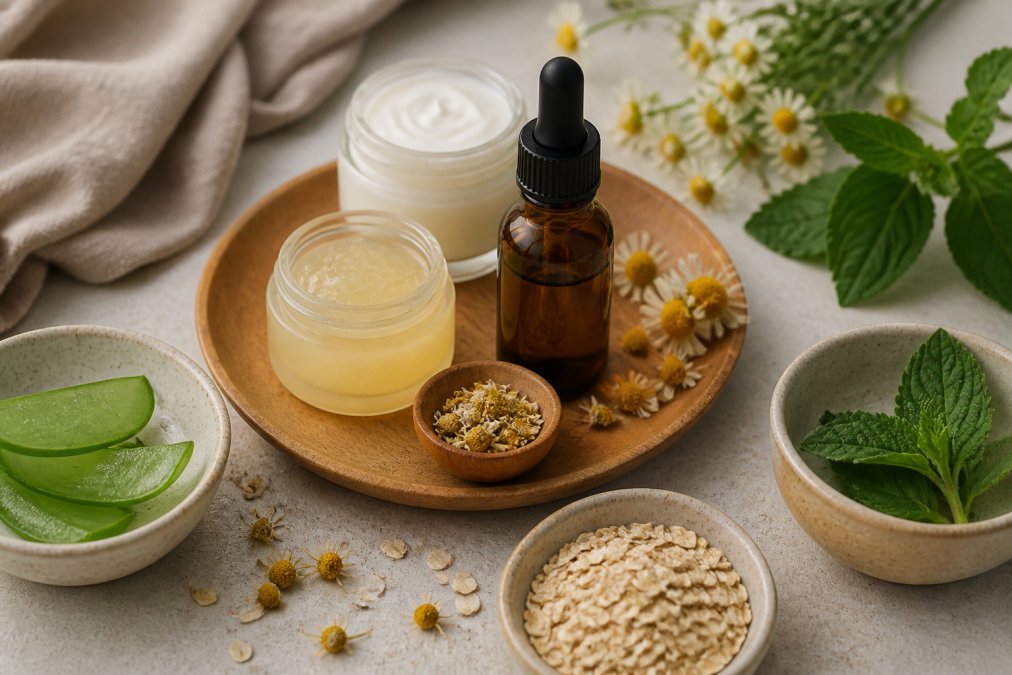
Aloe is a humectant that draws moisture and soothes inflammation. Shea and cocoa butter create protective barriers. Coconut oil penetrates quickly.
Jojoba, argan, and sweet almond oil mimic skin's natural sebum for barrier repair. Lavender and chamomile provide aromatherapy support.
Glycerin is a plant-derived humectant that appears in both artisanal and mass-market products. Artisanal makers use higher concentrations paired with complementary ingredients.
Look for active ingredients in the first five. If buried in the list, the formulation prioritizes other components over hydration.
Ingredients to Avoid for Sensitive Skin
Sulfates are cheap surfactants that strip skin and trigger irritation. Avoid sodium lauryl sulfate and sodium laureth sulfate in body wash and butter.
Synthetic fragrances (listed as "fragrance") trigger reactions in sensitive skin. Artisanal makers use essential oils or plant-derived compounds. For reactive skin, start with unscented products.
Avoid alcohol denat, phthalates, and parabens if you're sensitive.
Silicones create temporary barriers. Mineral oil is occlusive but doesn't penetrate like plant oils.
Start with products listing five or fewer recognizable ingredients. Artisanal body care uses fewer ingredients, reducing reaction risk.
Fragrance, Allergens, and Safe Choices for Reactive Skin
Fragrance is the most common trigger for reactive skin, so understanding how to navigate it matters. Synthetic fragrances (listed as "fragrance" or "parfum") contain hundreds of chemical compounds that manufacturers don't have to disclose individually.
Artisanal body care for dry skin often uses essential oils or natural fragrance compounds instead. These are more transparent, you can see lavender oil or vanilla extract listed, and tend to trigger fewer reactions. That said, essential oils aren't universally safe. Lavender, chamomile, and citrus oils are generally gentle.
If you have truly reactive skin, start with unscented products. Test any new body care on a small area of your inner arm before full-body application. Wait 24 hours to see if irritation develops. This seems cautious, but reactive skin requires this level of care.
Allergen labeling is important. Common allergens in body care include tree nuts (almond oil, shea butter), coconut, and essential oils like lavender. If you have known allergies, read the full ingredient list carefully. Artisanal makers typically list allergens clearly because they're aware of this concern, but always verify.
Fragrance-free isn't the same as unscented. Fragrance-free means no added scent, but the product may contain other compounds that create a smell. Unscented means the product has been specifically formulated to have no detectable odor. For reactive skin, unscented is usually the safer choice initially.
How to Evaluate Artisanal Formulations and Quality
Evaluating artisanal formulations requires looking beyond marketing language to actual formulation quality. Start by checking whether the maker lists a creator or credentials. Keith Clark Collection, for example, is made by a licensed massage therapist, that expertise shows in how the products are formulated and tested for actual skin response.
Read the ingredient list carefully. Artisanal products typically have shorter lists than mass-market equivalents. If the list is longer than ten ingredients, ask why. More ingredients mean more potential triggers and more complexity that may not add benefit.
Check the order of ingredients. Regulations require ingredients to be listed by concentration, highest first. If water is first, the product is mostly water. If a plant oil or butter is first, the product is genuinely rich. For body butter, you want plant oils and butters in the top three ingredients.
Look for transparency about sourcing. Quality artisanal makers specify where their ingredients come from and why they chose them. "Organic shea butter from Burkina Faso" tells you more than "shea butter." This specificity indicates the maker understands their supply chain and cares about ingredient quality.
Ask about consistency. Small-batch production means slight variations between batches are normal, this is actually a sign of authenticity. But the product should perform consistently. If one jar feels thick and another feels thin, that's a red flag. Artisanal makers who test their formulations carefully maintain consistency while keeping the handmade quality.
Check for third-party testing or certifications if you need that assurance. Many artisanal makers don't pursue formal certifications because the cost is prohibitive for small operations, but some do. If certifications matter to you, ask directly.
Seasonal and Environmental Adjustments for Dry Skin
Dry skin changes with seasons and environment, so your body care routine should too. Winter air is drier, heating systems remove moisture, and cold temperatures reduce your skin's natural oil production. This means winter requires heavier, more frequent applications than summer.
In winter, increase your body butter application frequency. Apply immediately after showering, then again before bed. Add a body oil layer to your routine. Consider switching to a richer body butter formulation if your summer product feels too light.
Summer presents the opposite challenge: products that worked in winter may feel too heavy. Lighter body lotions replace heavier butters. You might apply moisturizer once daily instead of twice. Humidity helps skin retain moisture, so you need less intensive hydration support.
Environmental factors matter too. If you live in a consistently dry climate (low humidity year-round), your baseline hydration needs are higher than someone in a humid region. Air travel, especially frequent flying, severely dehydrates skin. Increase your body care routine intensity during travel weeks.
Central heating and air conditioning both dry skin. If you spend eight hours daily in climate-controlled environments, treat your skin as if you're in a dry climate year-round. This is where artisanal body care's flexibility becomes valuable, you can adjust product choices and application frequency based on your specific environment rather than following a generic routine.
Water quality affects skin too. Hard water (high mineral content) can irritate dry skin. If you have hard water, increase your moisturizer application slightly to compensate for the additional irritation. Chlorinated water (common in treated municipal water) also dries skin.
Dry skin demands more than generic moisturizing. It requires formulations designed specifically for barrier repair, moisture retention, and gentle care. Keith Clark Collection's artisanal approach, handmade in small batches by a licensed massage therapist using plant-based ingredients and therapeutic botanicals, addresses these needs directly. When you're choosing body care for dry skin, prioritize transparency about ingredients, quality sourcing, and the maker's expertise. Your skin will respond noticeably to a consistent routine built on these principles. Explore our collection and find the artisanal body care formulations that match your skin's needs.
| Routine Step | Product Type | Timing | Frequency |
|---|---|---|---|
| Cleanse | Sulfate-free body wash | During shower | Daily |
| Moisturize | Body butter | Within 3 minutes post-shower | Daily |
| Layer | Lighter body oil or lotion | 5 minutes after body butter | Daily or as needed |
| Intensive care | Rich body butter or oil blend | Before bed | Nightly in winter |
According to the National Eczema Association's guidance on skin barrier health, maintaining proper hydration and using gentle cleansing products are foundational to managing dry and sensitive skin conditions. The organization emphasizes that product formulation matters significantly when skin is compromised.
Research from the American Academy of Dermatology on moisturizer selection highlights that emollients and humectants work best when applied to damp skin and layered for maximum effectiveness. This aligns with the three-step routine approach outlined above.
A 2025 study on plant-based skincare ingredients published in the Journal of Cosmetic Dermatology found that formulations combining multiple plant oils and butters showed measurably better moisture retention than single-ingredient products, supporting the artisanal approach of thoughtful ingredient combinations.
Frequently Asked Questions
What ingredients are best for dry skin on the body?
Plant-based emollients like shea butter, coconut oil, and plant glycerin lock moisture into skin. Aloe vera soothes irritation, while oils such as jojoba and argan provide deep hydration. Artisanal formulations often combine these in small-batch products designed to maximize their effectiveness without harsh additives. Look for products that list these ingredients prominently and avoid synthetic fillers that can strip moisture further.
Is artisanal body care effective for dry skin?
Yes. Artisanal body care made with plant-based ingredients and therapeutic botanicals addresses dry skin by using concentrated, high-quality formulations. Small-batch production allows for careful ingredient selection and stability testing, ensuring consistency and potency. Because artisanal products are often created by professionals, such as licensed massage therapists, they're formulated with deep understanding of skin health and hydration needs that mass-market alternatives may lack.
How should you apply body moisturizer after bathing?
Apply moisturizer to damp skin within 3 minutes of bathing to seal in hydration. Start with body wash for gentle cleansing, pat skin lightly (don't rub dry), then apply lotion or body butter while skin is still slightly moist. Use upward strokes and focus on areas prone to dryness: elbows, knees, heels, and shins. For extra dryness, layer a lighter lotion first, then top with body butter for lasting moisture retention.
Can fragrance or essential oils irritate dry skin?
Synthetic fragrances and some essential oils can irritate sensitive, dry skin. Natural essential oils used in artisanal formulations are generally gentler. If you have reactive skin, look for unscented options or products with minimal, skin-safe botanicals. Always test a small amount first, and consult product descriptions or reach out to makers about fragrance sources and concentrations before purchasing.