 listicle
Why Choose Black-Owned Skincare Brands: 2026 Guide
Table of Contents
- Why Choose Black-Owned Skincare Brands in 2026
- Beyond Representation: Formulation Science for Melanin-Rich Skin
- The Benefits of Supporting Black-Owned Businesses
- Artisanal Aromatherapy Skincare Benefits for Sensitive Skin
- Small-Batch vs. Mass-Produced Skincare: What Changes
- Budget-Friendly vs. Luxury Tiers: Finding Your Price Point
- How to Identify Authentic Black-Owned Beauty Businesses
- Conclusion
- Frequently Asked Questions
Last Updated: September 28, 2026
Why Choose Black-Owned Skincare Brands in 2026
A 2023 McKinsey analysis of the beauty industry found that Black consumers drive a disproportionate share of spending in personal care categories, yet brands formulated for their specific skin concerns remain underrepresented on shelves. That gap is exactly why more shoppers now ask why choose black owned skincare brands instead of defaulting to legacy labels.
The answer goes beyond representation. Black-owned skincare brands often start with melanin-rich skin as the baseline, not an afterthought. That changes everything from ingredient selection to testing protocols.
Below, we break down the formulation science, the economic impact, and the practical questions to ask before you buy.
Beyond Representation: Formulation Science for Melanin-Rich Skin
Melanin-rich skin is not simply darker skin. It has a different structural and biological profile that affects how it responds to active ingredients, inflammation, and environmental stress.
Higher melanin content offers natural protection against UV damage, but it also means the skin's barrier behaves differently. Post-inflammatory hyperpigmentation, or dark marks left after acne or irritation, is a primary concern for many people with deeper skin tones. Formulas designed around this reality tend to prioritize barrier support, gentle exfoliation, and ingredients that calm rather than strip.
What most generic skincare lines miss is that treating melanin-rich skin as a "niche" concern leads to under-formulated products.
The Benefits of Supporting Black-Owned Businesses
The benefits of supporting Black-owned businesses extend well past the individual purchase. Money spent with these brands tends to circulate within communities that have historically had less access to capital and shelf space in retail, but the more useful question for a skincare shopper is how that circulation actually works, and where your dollar lands inside the supply chain.
Economic Empowerment and Community Impact
Black-owned beauty businesses often operate with smaller margins and fewer distribution deals than legacy labels. That means every direct purchase carries more weight. It funds formulation research, small-batch production, and the kind of community hiring that larger conglomerates rarely prioritize.
A few concrete mechanisms worth understanding:
- Direct-to-consumer margins. When a brand sells through its own site instead of a big-box retailer, it keeps more of the retail price. That difference is often what pays for the next batch of raw materials or a formulation tweak.
- Supplier choice. Brands that buy botanicals, butters, and carrier oils from small farms, including Black-owned and women-owned suppliers, keep more of the value chain inside the same ecosystem. This is the sourcing-ethics layer most listicles skip entirely.
- Reinvestment patterns. A common pattern among small beauty founders is to reinvest early revenue into certifications, safety testing, and batch-record systems rather than paid advertising. That is a slower growth path, but it produces a more durable product.
Ingredient Transparency and Sourcing Ethics: The Angle Most Articles Miss
Most coverage of Black-owned skincare stops at 'support the community.' The harder, more useful conversation is about supply chain ethics, where the shea, the baobab, the marula, and the carrier oils actually come from, and who gets paid along the way.
- Named origin. 'Sourced from Ghana' or 'cold-pressed in small cooperatives' is more verifiable than 'ethically sourced.'
- Fair-trade or cooperative language. Brands that buy through cooperatives typically pay per harvest rather than per middleman, which changes the economics at the farm level.
- Cold-press vs. solvent extraction. Cold-pressed oils retain more of their natural fatty acids and antioxidants; solvent-extracted oils are cheaper but leave a different chemical profile. The method matters for sensitive skin.
- Batch traceability. A maker who can tell you which harvest a given bottle came from is running a tighter operation than one who cannot.
Artisanal Aromatherapy Skincare Benefits for Sensitive Skin
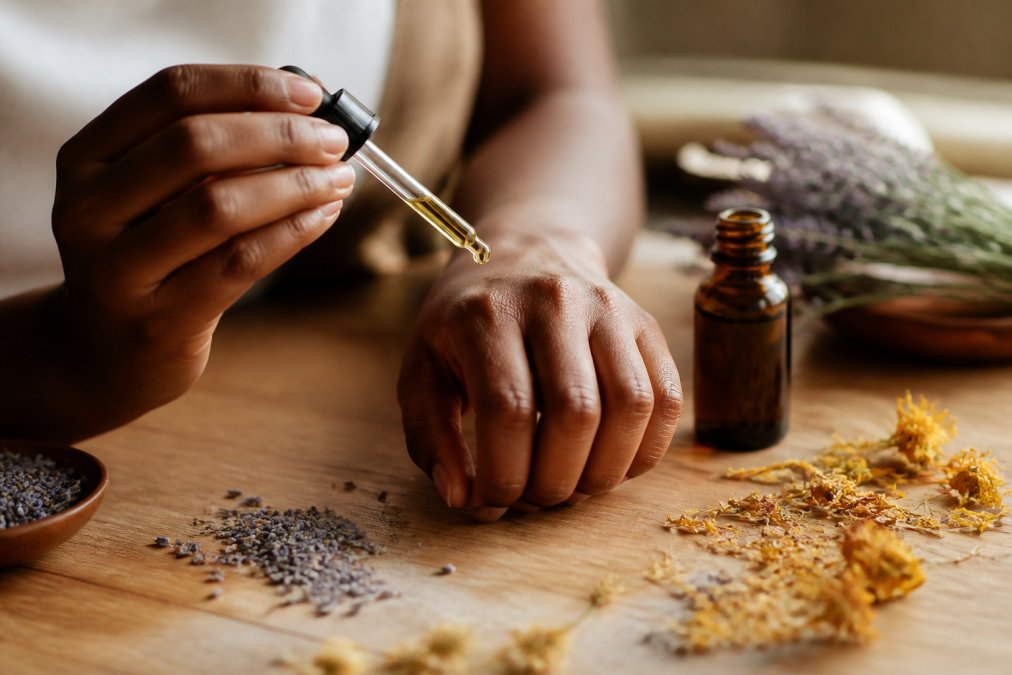
Artisanal aromatherapy skincare can be a good choice for those seeking alternatives to synthetic fragrance and harsh preservatives. Small-batch makers often rely on plant-based ingredients and therapeutic botanicals.
Small-Batch vs. Mass-Produced Skincare: What Changes
Small-batch vs mass-produced skincare comes down to three things: consistency, cost, and transparency. Small-batch production gives makers more control over each run, but it also means fewer economies of scale.
Consistency, Cost, and Ingredient Transparency
Mass-produced products are engineered for identical results in every unit. Small-batch products can vary slightly from run to run because they are made by hand in limited quantities. Good makers manage this with strict batch records and quality checks, so the experience stays reliable even when the process is manual.
| Factor | Small-Batch Skincare | Mass-Produced Skincare |
|---|---|---|
| Consistency | Managed per batch with quality checks | Engineered for identical units |
| Cost | Higher per unit, fewer shortcuts | Lower per unit, scale-driven |
| Transparency | Often full ingredient disclosure | Frequently limited by trade secrets |
| Customization | Formulated for specific skin concerns |
Budget-Friendly vs. Luxury Tiers: Finding Your Price Point
Budget-friendly and luxury tiers both have a place, and the right choice depends on what you actually need from a product. You do not have to spend the most to get effective skincare.
Here is how to think about the tiers:
- Entry tier: Single-ingredient oils, basic cleansers, and simple moisturizers. Best for building a foundation routine.
- Mid tier: Blended formulas with active botanicals and targeted concerns like hyperpigmentation or dryness.
- Luxury tier: Small-batch products with rare ingredients, detailed sourcing, and often a licensed practitioner behind the formulation.
How to Identify Authentic Black-Owned Beauty Businesses
Authenticity is harder to verify than a label suggests. A brand can use inclusive marketing without being Black-owned or community-rooted. The checklist below goes beyond the usual 'check the About page' advice and focuses on the two signals most shoppers overlook: practitioner credentials and formulation validation for melanin-rich skin.
Ownership and Founder Verification
- Confirm ownership is stated clearly on the brand's About page, not just 'founded by' but who currently owns and operates it
- Look for a named founder with a verifiable background (licensing, training, prior industry roles)
- Check whether the brand is listed in any public Black-owned business directories or industry registries
- Read reviews from customers with skin concerns similar to yours, not just general praise
Practitioner Credentials: The Signal Most Shoppers Miss
A brand made by a licensed professional, such as a massage therapist, often brings formulation expertise. Licensing in the U.S. is state-issued and verifiable, which means you can usually confirm a founder's credential through the state board that issued it.
What to look for:
- A named license type and state. 'Licensed esthetician (TX)' is a real claim; 'trained in skincare' is not.
- Scope of practice. A massage therapist who formulates topical products for muscle relief is operating within a different scope than a dermatologist prescribing actives. Both can be legitimate, but they are not interchangeable.
- Continuing education. Practitioners who list ongoing training in skin of color, barrier repair, or cosmetic chemistry are signaling that the formulation is not guesswork.
Scientific Validation for Melanin-Rich Skin
Representation matters, and melanin-rich skin has a different structural and biological profile. Formulas designed around it tend to address specific concerns more directly.
- Hyperpigmentation strategy. Does the formula explain how it addresses post-inflammatory hyperpigmentation, through tyrosinase inhibition, gentle exfoliation, or barrier support? Vague claims like 'brightening' are weaker than mechanism-level ones.
- Keloid and scar consideration. People with deeper skin tones have a higher risk of keloid formation. A brand that acknowledges this in its formulation notes is paying attention.
- Barrier-first logic. Harsh actives can trigger the inflammation that leads to dark marks in the first place. Formulas that prioritize barrier support before exfoliation are usually the safer starting point.
- Testing population. Ask whether the product was tested on skin of color or simply marketed to it. The two are not the same.
Red Flags to Watch For
- Ownership described in vague or shifting language across the site and social media
- Ingredient lists that use 'fragrance' or 'parfum' without further disclosure, especially for products marketed to sensitive skin
- 'Natural' claims with no sourcing detail and no batch or lot information
- Practitioner claims that cannot be verified through a state licensing board
Two angles most shoppers overlook: ingredient transparency and practitioner credentials. A brand that is clear about both, and that can explain why a given ingredient was chosen for melanin-rich skin, is usually the one worth your money.
Conclusion
Finding skincare that respects both your skin and your values takes more than a quick search. It takes knowing what to look for: formulation science built for melanin-rich skin, honest ingredient sourcing, and makers who stand behind their work.
Frequently Asked Questions
What are the benefits of supporting Black-owned skincare brands?
Black-owned skincare brands often formulate with melanin-rich skin in mind, addressing concerns like hyperpigmentation and sensitivity that mainstream products can overlook. Beyond formulation, your purchase supports economic empowerment and community reinvestment. Many of these brands also prioritize ingredient transparency and clean beauty standards, so you know exactly what you are putting on your skin. Choosing Black-owned skincare means getting products designed for diverse skin types while backing businesses that serve underrepresented communities.
What makes artisanal aromatherapy skincare unique compared to mass-produced options?
Artisanal aromatherapy skincare is typically made in small batches using plant-based ingredients and therapeutic botanicals. Because production runs are smaller, makers can focus on quality control and fresh ingredients rather than long shelf-life additives. The aromatherapy component adds an emotional well-being benefit that goes beyond basic moisturizing. For people with sensitive skin, these gentler formulations can reduce irritation risk while still delivering real hydration and skin barrier support.
How do Black-owned skincare brands prioritize ingredient transparency?
Many Black-owned brands publish full ingredient lists, explain sourcing practices, and avoid vague terms like 'fragrance' when possible. Some work directly with suppliers to verify ethical sourcing. This transparency matters because non-toxic ingredients and product safety are top concerns for conscious consumers. When a brand clearly states what is in the jar and why, you can make informed decisions about whether a product fits your skincare routine and skin sensitivity needs.
Is small-batch skincare more expensive than mass-produced products?
Small-batch skincare often costs more because production runs are smaller, ingredients are higher quality, and there are fewer economies of scale. However, pricing varies widely across budget-friendly and luxury tiers. Some brands offer entry-level products that compete with drugstore prices, while others position themselves as premium. The key is to compare cost per use and ingredient quality rather than just the sticker price. Check the brand's website for current pricing.