 blog
blog
Best Essential Oil Home Scents: 2026 Diffuser Guide
Table of Contents
- Why Essential Oil Home Scents Beat Synthetic Air Fresheners
- Top Essential Oil Home Scents for Every Room
- Essential Oil Diffuser Blends for Home: Recipes That Work
- How to Use Essential Oils for Home Fragrance
- Essential Oil Safety for Home Diffusers: Pets, Kids, and More
- Diffuser Maintenance and Scent Layering Tips
- Therapeutic Grade vs. Budget Oils: What to Know
- Conclusion
- Frequently Asked Questions
Last Updated: September 27, 2026
Why Essential Oil Home Scents Beat Synthetic Air Fresheners
Most air fresheners don't freshen the air, they coat it. A synthetic spray layers fragrance over odors, and when it fades you're back where you started, plus a headache. Best essential oil home scents work differently: plant-derived aromatic compounds shift the room's atmosphere rather than masking it.
Top Essential Oil Home Scents for Every Room
The right essential oil home scents depend on what the room is for: a bedroom needs calming properties, a home office something invigorating. Matching oil to function is the single biggest upgrade you can make.
Here's how the main scent families map to spaces:
| Scent Family | Best Room | Effect | Example Oils |
|---|---|---|---|
| Citrus | Kitchen, office | Invigorating, focus | Lemon, orange, grapefruit |
| Floral | Bedroom, bath | Soothing, romantic | Lavender, geranium, ylang-ylang |
| Woodsy | Living room, den | Grounding, warm | Cedarwood, sandalwood, pine |
| Herbal | Entryway, kitchen | Fresh, clean | Rosemary, basil, eucalyptus |
| Spicy | Living room, dining | Cozy, welcoming | Cinnamon, clove, ginger |
Citrus Oils for Energy and Focus
Citrus oils are the coffee of aromatherapy, they wake up a room fast and suit kitchens and workspaces where you want alertness. Lemon, sweet orange, grapefruit, and bergamot blend easily with mint or rosemary for an extra lift.
Floral and Woodsy Scents for Grounding
Floral and woodsy oils do the opposite: they slow a room down. Lavender is the best-known sleep aid here, but geranium, chamomile, and ylang-ylang bring a softer floral profile, while cedarwood, sandalwood, and pine deliver the grounding quality that makes a living room feel settled.
Essential Oil Diffuser Blends for Home: Recipes That Work
Good essential oil diffuser blends for home often follow a simple ratio: roughly 3 parts top note, 2 parts middle, 1 part base. That structure opens bright, develops depth, and lingers.
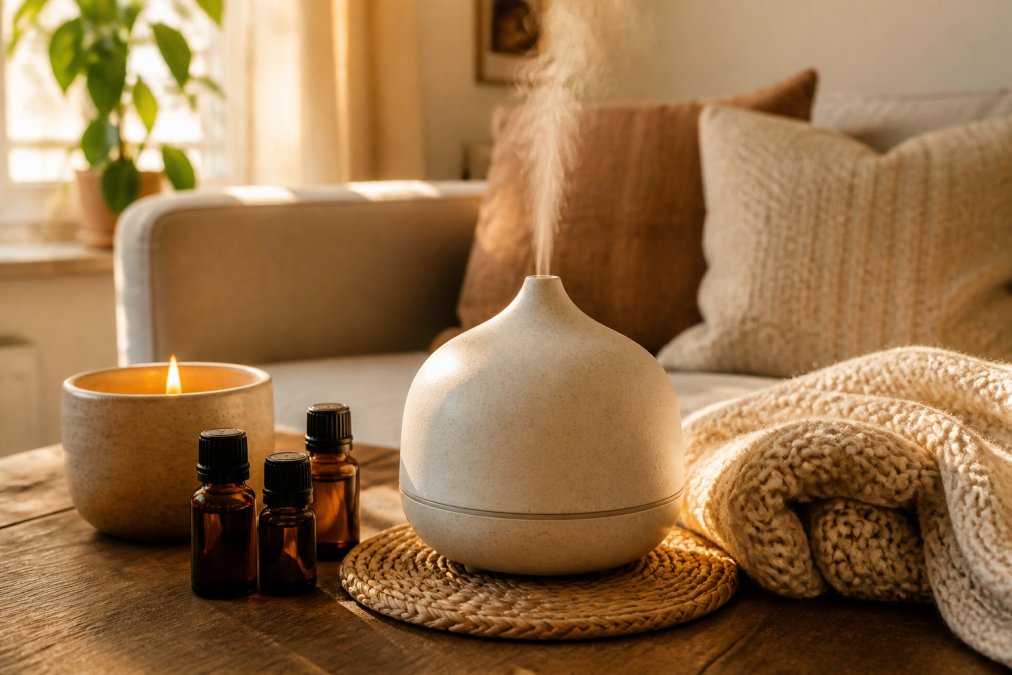
Try these three:
- Morning Focus: 3 drops lemon, 2 drops rosemary, 1 drop peppermint
- Evening Unwind: 3 drops lavender, 2 drops geranium, 1 drop cedarwood
- Cozy Autumn: 3 drops sweet orange, 2 drops cinnamon bark, 1 drop clove
How to Use Essential Oils for Home Fragrance
Knowing how to use essential oils for home fragrance comes down to three methods: diffusing, room spray, and passive diffusion. Each suits a different situation.
- Diffuse for ongoing ambiance in a closed room. Run it 30-60 minutes at a time.
- Make a room spray for quick refresh. Combine 10-15 drops of oil with a tablespoon of witch hazel and top with distilled water in a glass bottle. Shake before each use.
- Use passive diffusion for small spaces. A few drops on a cotton pad or terra cotta disc near a vent releases scent slowly without any power.
Essential Oil Safety for Home Diffusers: Pets, Kids, and More
The oils that smell best in a diffuser are often the ones most likely to harm the smallest members of the household, so read this section twice.
Cats: The Highest-Risk Household Member
Cats poorly metabolize many terpenes and phenols in essential oils, and because they groom themselves, anything settling on their coat can be ingested. Oils that are often flagged by veterinarians and pet poison resources include:
- Citrus (lemon, orange, grapefruit, bergamot), limonene and other citrus terpenes
- Pine, spruce, and fir, pinene and related compounds
- Tea tree, eucalyptus, peppermint, wintergreen, and cinnamon, phenols and ketones that are especially hard on feline livers
- Sweet birch and clove, high in eugenol and methyl salicylate
Dogs: More Tolerant, Still Sensitive
Dogs metabolize many oils better than cats but aren't immune. Anise, clove, garlic, juniper, thyme, wintergreen, and ylang-ylang are frequently listed as oils to avoid around dogs. Smaller dogs, puppies, and brachycephalic breeds (bulldogs, pugs, Boston terriers) may react more.
Birds, Reptiles, and Small Mammals
Birds have extremely efficient respiratory systems and are very sensitive common pets to airborne oils, even brief exposure can cause distress. Reptiles, hamsters, guinea pigs, and rabbits are also highly reactive. If you keep birds or small caged pets, diffuse in a closed-off room they can't access, or skip diffusing altogether.
Children and Infants
For kids, the concern is concentration and duration, not just which oil. A few guidelines to consider:
- Stick to gentle oils, lavender, chamomile, sweet orange, and skip strong mints, eucalyptus, and camphor around children under six
- Never diffuse in a closed nursery while an infant or toddler sleeps
- Run sessions of 15-30 minutes, then ventilate
- Keep the diffuser out of reach; undiluted oils are a poisoning risk if swallowed
A Simple Household Safety Checklist
- Ventilate the room during and after diffusing
- Keep sessions short, 30 to 60 minutes, not all day
- Never leave a diffuser running unattended in a sealed room with pets or kids
- Store bottles locked away from children and pets
- When in doubt, ask your veterinarian or pediatrician about the specific oil before you diffuse it
Diffuser Maintenance and Scent Layering Tips
Keeping the hardware clean and building scent in layers can help a home smell consistently good.
Why Diffuser Maintenance Matters More Than You Think
Ultrasonic diffusers vibrate a metal disc at high frequency to aerosolize water and oil. Every session can leave a thin oil film on that disc and the reservoir walls; left alone it may oxidize, and the next run could burn it off as a stale, acrid note that contaminates your fresh oil.
A Weekly Cleaning Routine
- Unplug the diffuser and empty any remaining water
- Add a few drops of white vinegar to the reservoir and wipe with a soft cloth, never use abrasive pads on the ultrasonic disc
- Rinse thoroughly with clean water and dry completely before refilling
- For a deeper clean, run a 50/50 water-and-vinegar cycle for about ten minutes, then rinse and air-dry
For stubborn residue, a vinegar-dipped cotton swab reaches the reservoir corners. Avoid harsh chemical cleaners, whose fumes can mix with your next blend.
How Often to Deep Clean
- Weekly: quick vinegar wipe and rinse
- Every two to four weeks: full water-and-vinegar cycle
- Whenever you switch scent families: clean first, or the old base note will bleed into the new blend
- Before storing: clean, dry completely, and store with the lid off so no moisture gets trapped
Replace the diffuser if the ultrasonic disc shows pitting, discoloration, or a persistent smell after cleaning. A worn disc may not atomize oil properly and could make blends smell weak.
Scent Layering: Think Like a Perfumer
Scent layering means building a blend in three tiers:
- Top notes, bright, fast-evaporating oils like lemon, sweet orange, bergamot, and peppermint. They set the first impression.
- Middle notes, the heart of the blend: lavender, geranium, rosemary, chamomile, ylang-ylang. They bridge top and base.
- Base notes, heavy, slow-evaporating oils like cedarwood, sandalwood, vanilla, patchouli, and frankincense. They anchor the blend and give it staying power.
A starting ratio of roughly 3 parts top, 2 parts middle, 1 part base is often suggested.
Building a Signature Home Scent
Instead of one oil per session, pick a base note you love and rotate top notes around it by season:
- Fall and winter: cedarwood or vanilla base with cinnamon, clove, or sweet orange on top
- Spring and summer: sandalwood or frankincense base with lemon, grapefruit, or lavender on top
Therapeutic Grade vs. Budget Oils: What to Know
"Therapeutic grade" is not a regulated term in the United States, any brand can print it on a label. What often distinguishes a quality oil is purity, sourcing, and extraction method.
Conclusion
Building a home that smells the way you want can involve more than one good oil: considering the right oil for each room, blends, and a safety routine that accounts for everyone in the house, pets included.
Frequently Asked Questions
How do I make my house smell amazing all the time using essential oils?
Consistency is key. Run a diffuser for 30-60 minutes in the morning and evening, and refresh rooms with a linen or room spray midday. Rotate scents to prevent olfactory fatigue. For a lasting base, place a few drops on a cotton ball inside air vents or use a reed diffuser in entryways. Pair with good ventilation and regular cleaning to keep the air fresh.
What essential oils smell the best together for home fragrance?
Classic pairings include lavender and lemon for calm, peppermint and eucalyptus for focus, and orange and cinnamon for warmth. Woodsy oils like cedarwood blend well with floral notes such as geranium. For a spa-like feel, try bergamot with frankincense. Experiment with a 3:2:1 ratio of top, middle, and base notes to create a balanced scent profile.
Are essential oils safe for pets and children in the home?
Not all oils are safe. Tea tree, eucalyptus, and citrus can be toxic to pets, especially cats. For children, avoid peppermint and eucalyptus under age 6. Always dilute properly and ensure good ventilation. Consult a veterinarian or pediatrician before diffusing around sensitive individuals. Keep diffusers out of reach and never apply oils directly to pets or children without professional guidance.
How do I choose the right essential oil scent for different rooms?
Match the oil to the room's function. For bedrooms, choose calming scents like lavender or chamomile. In living areas, use bright citrus or floral blends to welcome guests. Kitchens benefit from purifying oils like lemon or tea tree. Bathrooms do well with eucalyptus or peppermint. For home offices, rosemary or grapefruit can boost focus. Consider the room's size and airflow when deciding how many drops to use.
Choosing the right essential oil home scents is really about choosing how you want your space to feel. Keith Clark Collection makes that easier with small-batch, aromatherapy-powered home scents created by a licensed massage therapist using plant-based ingredients and therapeutic botanicals. Every product is designed to support calm, clarity, and comfort in your daily routine. Shop by category and find the scent that fits your home.