 blog
blog
Best Natural Skincare for Sensitive Skin: 2026 Guide
Table of Contents
- What Makes the Best Natural Skincare for Sensitive Skin
- Natural Skincare Ingredients to Avoid for Sensitive Skin
- Benefits of Aromatherapy in Skincare
- How to Build a Natural Skincare Routine for Sensitive Skin
- Microbiome-Friendly Formulations and Calming Botanical Extracts
- Seasonal Adjustments and Budget-Friendly Natural Alternatives
- Frequently Asked Questions
Last Updated: September 26, 2026
What Makes the Best Natural Skincare for Sensitive Skin
The best natural skincare for sensitive skin is a short, fragrance-free routine built on three things: a healthy skin barrier, a balanced pH, and ingredients you have patch tested. Sensitivity is not a skin type. It is a reaction, and the right formula calms it instead of feeding it.
Natural Skincare Ingredients to Avoid for Sensitive Skin
The first rule of natural skincare ingredients to avoid for sensitive skin is simple: "natural" does not mean "gentle." Some of the most irritating ingredients in skincare come straight from plants. If your skin stings, turns red, or itches after a new product, one of these is usually the cause.
Watch for:
- Added fragrance and parfum, including "natural" fragrance blends
- Essential oils such as citrus, peppermint, eucalyptus, and lavender
- Drying alcohols like denatured alcohol and SD alcohol
- Physical scrubs with walnut shell or coarse salt
- Preservatives that trigger reactions in reactive skin
Essential Oil Sensitivity and Hidden Fragrance
Essential oil sensitivity is more common than most people realize, and it is the top reason a "natural" product backfires. Cold-pressed citrus oils, for example, can cause photosensitivity, meaning skin burns more easily in the sun. Peppermint and eucalyptus create a cooling tingle that many people mistake for a reaction working, when it is actually irritation.
Benefits of Aromatherapy in Skincare
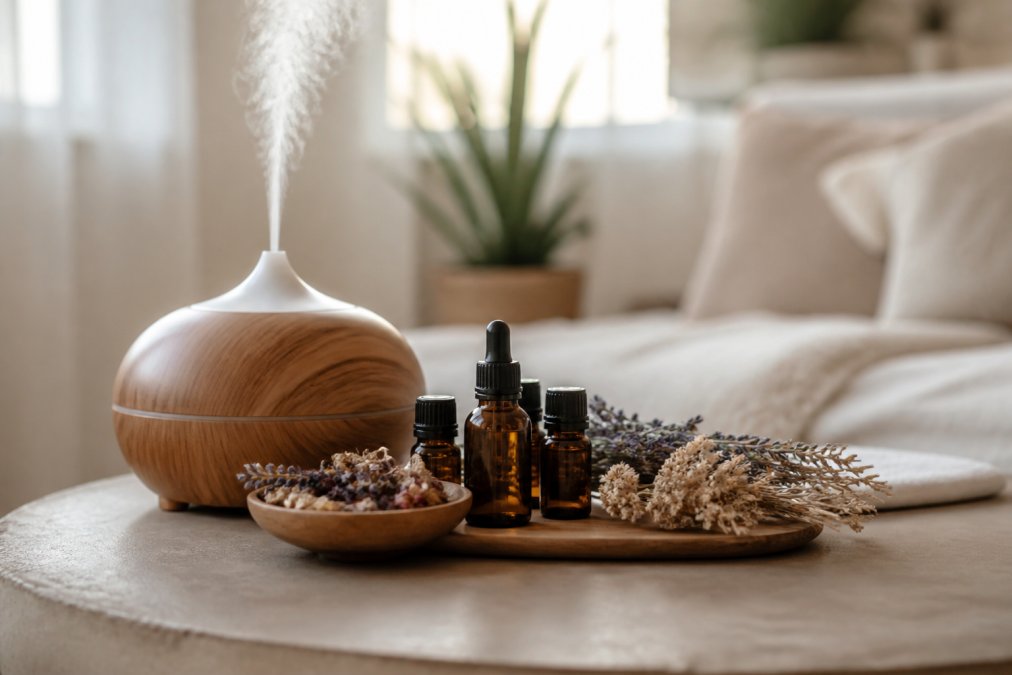
Aromatherapy in skincare is often sold as a mood boost with a nice smell. For sensitive skin, that framing is backwards. The real question is whether a botanical compound calms the skin barrier or provokes it, and the answer depends on the molecule, the concentration, and how it is delivered.
Which Botanicals Tend to Be Gentler
If you want aromatherapy in a routine for reactive skin, favor botanicals with a low reported sensitization profile and a documented soothing mechanism:
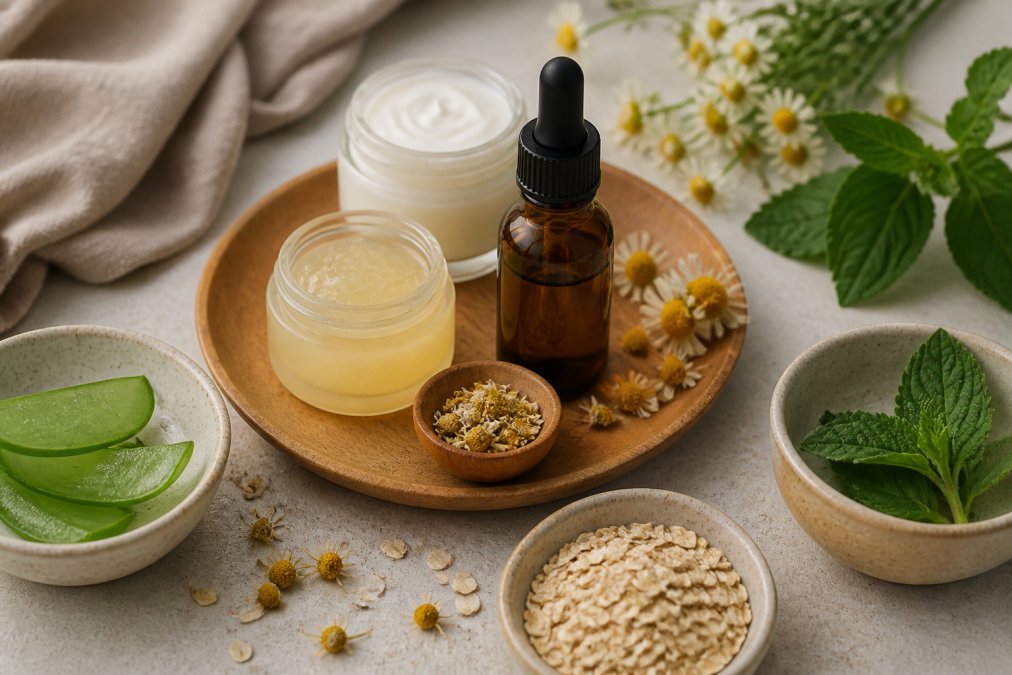
- Chamomile (bisabolol, chamazulene), anti-inflammatory, widely used in barrier creams
- Oat (colloidal oatmeal, avenanthramides), recognized for calming itch and redness
- Green tea (EGCG), antioxidant support with a low irritation profile
- Licorice root (glabridin), helps with visible redness and uneven tone
- Centella asiatica (madecassoside), supports barrier repair and calming
Which Botanicals to Approach With Caution
These are the ones most often implicated when a 'natural' product backfires on reactive skin:
- Citrus essential oils (bergamot, lemon, lime, grapefruit), phototoxic; can cause burns and blistering when skin is exposed to sun
- Peppermint and eucalyptus, the cooling tingle is irritation, not efficacy
- Lavender and tea tree, common contact allergens despite their gentle reputation
- Cinnamon, clove, and wintergreen, high sensitization potential
- Any 'natural fragrance' or 'aroma' blend, the individual components are usually undisclosed
How to Use Aromatherapy Without Triggering a Flare
- Choose fragrance-free formulas first. If you want scent, add it deliberately rather than accepting whatever is in the base.
- Prefer leave-on products with single, named botanicals over blends with 'parfum' or 'aroma' on the label.
- Patch test every new botanical using the forearm protocol in the routine section below, 24 and 48 hours before facial use.
- Avoid photosensitizing oils if you use retinoids, acids, or spend time outdoors.
- Introduce one botanical at a time so you can attribute a reaction to a specific ingredient.
The honest position is that aromatherapy can support calm skin and a calm mind, but only when the botanical choice is deliberate and the concentration is low. For sensitive skin, the scent is the last thing to optimize, not the first.
How to Build a Natural Skincare Routine for Sensitive Skin
A natural skincare routine for sensitive skin should have four steps and no more: cleanse, treat, moisturize, protect. Fewer products means fewer chances to trigger a reaction. This is not about doing less for its own sake. It is about giving your barrier room to repair.
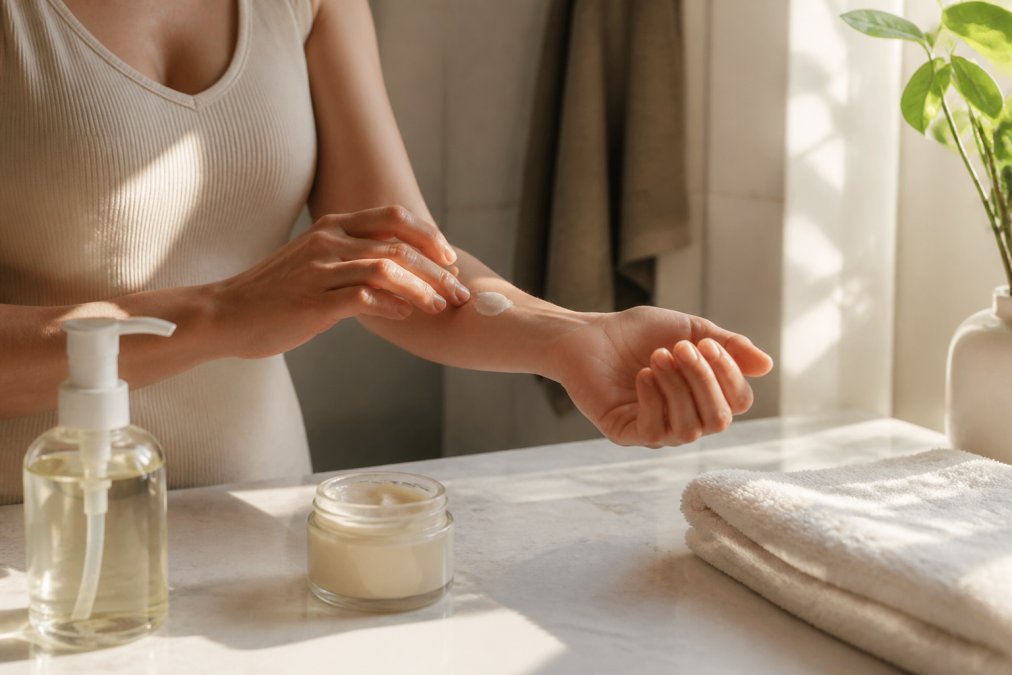
Here is the core routine, in order:
- Cleanse with a gentle, fragrance-free cleanser and lukewarm water.
- Treat with a soothing serum if your skin tolerates it.
- Moisturize with a plant-based moisturizer to support the lipid barrier.
- Protect with mineral sun protection every morning.
A Step-by-Step Routine with a Patch Test Protocol
Patch testing is the step most guides skip, and it is the one that protects you. A patch test checks whether your skin will tolerate a product before you apply it to your face.
Here is a protocol you can use today:
- Apply a small amount to your inner forearm or behind your ear
- Leave it uncovered and do not wash it off for 24 hours
- Check for redness, itching, or swelling at 24 and 48 hours
- If your skin stays calm, repeat on a small area of your jawline
- Wait another 24 hours before using it on your full face
| Step | Product Type | Frequency | Patch Test First? |
|---|---|---|---|
| Cleanse | Gentle cleanser | Twice daily | Yes |
| Treat | Soothing serum | Once daily | Yes |
| Moisturize | Plant-based moisturizer | Twice daily | Yes |
| Protect | Mineral sun protection | Every morning | Yes |
Microbiome-Friendly Formulations and Calming Botanical Extracts
Microbiome-friendly formulations support the community of bacteria that lives on your skin and helps keep it healthy. Harsh cleansers strip that community away, which leaves skin more reactive over time. Gentle, pH-balanced formulas protect it instead.
Seasonal Adjustments and Budget-Friendly Natural Alternatives
Most guides treat seasonal skincare as a mood board: heavier cream in winter, lighter lotion in summer. That advice is directionally right but useless without specifics. Reactive skin needs a routine that responds to measurable changes, humidity, temperature, and UV index, not to the calendar.
What Actually Changes With the Seasons
Winter. Indoor heating can drop relative humidity well below the 40-60% range that skin prefers. The result is increased transepidermal water loss (TEWL), which is the technical term for water escaping through the barrier. For reactive skin, that means more stinging, more visible flaking, and a higher chance that a product you tolerated in July now irritates you.
What to adjust:
- Swap a gel moisturizer for a cream or balm with ceramides, squalane, or shea butter
- Reduce cleansing to once daily in the evening if morning skin feels tight
- Lower water temperature, hot showers strip lipids from the barrier
- Add an occlusive layer at night (petrolatum or a plant wax balm) if flaking persists
What to adjust:
- Move to a lightweight lotion or gel-cream if heavier formulas feel occlusive
- Reapply mineral sunscreen every two hours outdoors
- Double-cleanse gently at night to remove sunscreen without scrubbing
- Pause photosensitizing botanical oils (citrus, bergamot) entirely
Budget-Friendly Natural Staples That Actually Work
The premium end of natural skincare is not where the efficacy lives. Several of the most studied barrier-supporting ingredients are inexpensive and widely available:
- Colloidal oatmeal, recognized for soothing itch and irritation; found in drugstore bath and lotion products
- Petrolatum, one of the most effective occlusives available; a thin layer at night supports barrier repair
- Squalane, lightweight, low comedogenic, and available at a fraction of the cost of branded 'botanical' oils
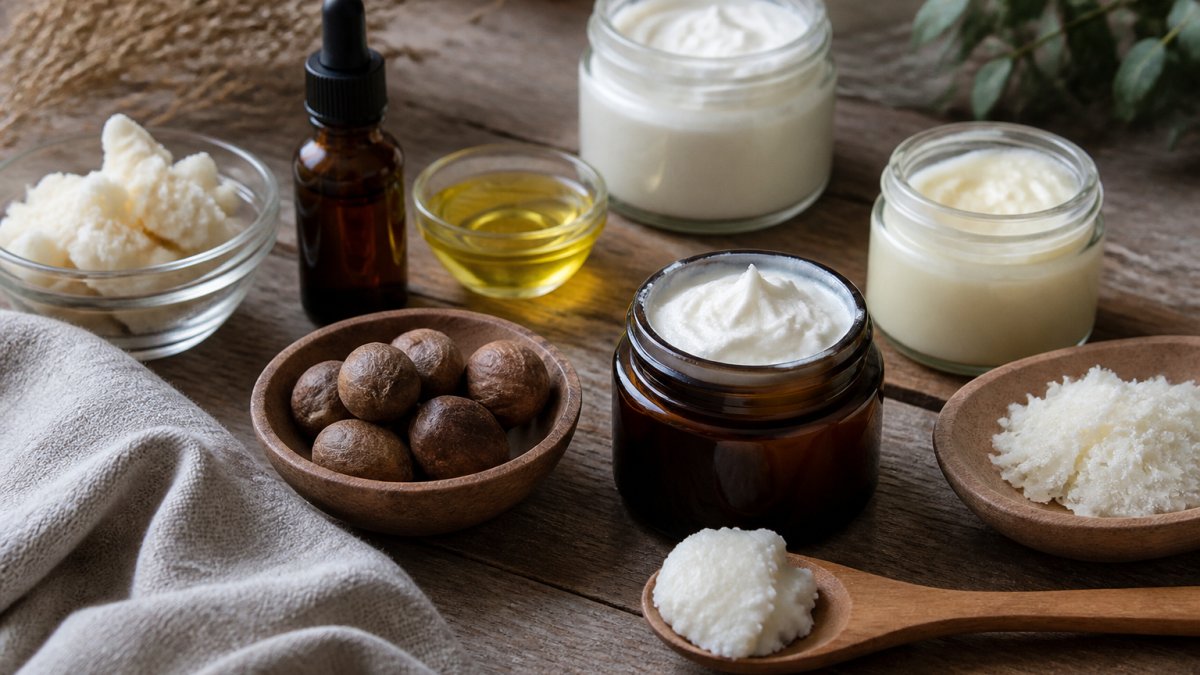
- Shea butter, rich in fatty acids, effective in winter formulas
- Glycerin, a humectant that pulls water into the skin; cheap and well tolerated
- Sunflower seed oil, high in linoleic acid, which reactive and acne-prone skin often lacks
The Sustainability Trade-Off Nobody Names
Small-batch and artisanal production is often framed as more sustainable, but the picture is mixed. Small batches can mean less overproduction and fewer synthetic fillers, but they also tend to use more packaging per unit and have shorter shelf lives, which drives more frequent repurchasing. Large-batch production is more resource-efficient per unit but relies on preservative systems that some reactive skin reacts to.
- Efficacy first. A product that flares your skin is not sustainable, no matter how it was made.
- Fewer, better products. A four-step routine uses less total packaging than a ten-step one.
- Refill or larger sizes where the formula works for you, to cut packaging per use.
- Question 'natural' claims. The term is not regulated the way 'organic' is under the USDA National Organic Program, so it can mean almost anything on a label.
Frequently Asked Questions
What is the best skincare for extremely sensitive skin?
Extremely sensitive skin does best with short ingredient lists built around a healthy skin barrier. Look for fragrance-free, hypoallergenic formulas with soothing agents like colloidal oatmeal, bisabolol, and plant-based oils such as cold-pressed jojoba or sunflower. Avoid essential oils, denatured alcohol, and synthetic fragrance, which are common triggers for reactive skin. Always patch test a new product on your inner forearm for 24 to 48 hours before applying it to your face, and introduce only one new product at a time so you can identify what works.
How do I know if a natural skincare product is safe for sensitive skin?
Check the label for fragrance-free and hypoallergenic claims, a short ingredient list, and no essential oils or drying alcohols. A pH balance close to skin's natural range and dermatologist-tested or non-comedogenic labeling are useful signals. Then run a patch test: apply a small amount behind your ear or on your inner forearm, wait 24 to 48 hours, and watch for redness, itching, or stinging. If your skin stays calm, introduce the product slowly into your natural skincare routine for sensitive skin, one item at a time.
Are natural products automatically better for sensitive skin?
No. Natural does not mean irritation-free. Botanical extracts, essential oils, and organic components can still trigger redness or stinging in reactive skin, and some natural preservatives are common allergens. The best natural skincare for sensitive skin pairs plant-based ingredients with a fragrance-free, non-comedogenic formula that supports the lipid barrier. What matters is the specific ingredient and how your skin responds, not the word natural on the label. Patch testing remains the only reliable way to know how a product will behave on your skin.
Can I use aromatherapy skincare if I have sensitive skin?
You can, with care. Benefits of aromatherapy in skincare include calming the senses and supporting emotional well-being, and some botanical extracts double as soothing agents. But essential oil sensitivity is real, so choose products made for reactive skin and patch test first. If your skin reacts, look for aromatherapy-free or fragrance-free alternatives that still deliver skin hydration and moisture retention. Many people find that a gentle scent in a body oil or balm works well, while facial products are better kept fragrance-free.