 how-to
Essential Oils for Muscle Relief: A How-To Guide
Last Updated: October 23, 2026
Quick Summary
Essential oils for muscle relief work best when diluted with a carrier oil and matched to your specific need, such as peppermint oil for post-workout soreness or warming blends for deep tension. These oils create temporary sensory relief through cooling or warming sensations that typically last 20 to 60 minutes and work best as part of a complete recovery approach that includes rest, hydration, and stretching.
- Always dilute essential oils with a carrier oil before applying to skin; use 2-3% dilution for large muscle groups like the back and thighs.
- Peppermint oil creates a cooling sensation lasting 20 to 30 minutes by activating cold receptors in the skin.
- A warming blend recipe uses 1 tablespoon coconut oil with 2 drops black pepper, 2 drops ginger, 2 drops marjoram, and 1 drop rosemary oil.
- Avoid peppermint and eucalyptus near the face of children under 6 due to laryngospasm risk.
- Seek medical care if muscle pain is severe, worsens after 48-72 hours, or is accompanied by swelling, weakness, or fever.
Table of Contents
- Essential Oils for Muscle Relief: What Works and Why
- Peppermint Oil for Muscle Soreness and Post-Workout Tension
- How to Dilute Essential Oils for Massage
- Essential Oil Massage Oil Recipe for Sore Muscles
- Natural Remedies for Sore Muscles Beyond Essential Oils
- Step-by-Step Application Method for Muscle Relief
- Safety, Contraindications, and When to Seek Medical Care
- Frequently Asked Questions
Essential Oils for Muscle Relief: What Works and Why
Essential oils for muscle relief have become a go-to choice for people seeking natural ways to ease sore muscles and tension. At Keith Clark Collection, we create aromatherapy-powered body care products that blend therapeutic botanicals with expert knowledge from our licensed massage therapist founder.
Muscle soreness hits differently depending on the cause: post-workout soreness differs from chronic tension, and a strained muscle requires different care than general stiffness. Essential oils can complement your recovery routine, but they work best when matched to your specific need.
Here's what you need to know to use essential oils effectively for muscle discomfort.
Peppermint Oil for Muscle Soreness and Post-Workout Tension
Peppermint oil is the most popular choice for muscle relief. It creates a cooling sensation that feels refreshing on tired muscles. Many people reach for it after exercise or when dealing with muscle aches.
How Peppermint Creates a Cooling Sensation
The cooling effect comes from menthol, a compound in peppermint that activates cold receptors in your skin. Your brain interprets this as cooling, even though the oil doesn't lower temperature.
This sensation eases discomfort temporarily by distraction: your nervous system focuses on the cooling feeling rather than the soreness. The effect is immediate but temporary, usually lasting 20 to 30 minutes after application.
Best Practices for Application
Always dilute peppermint oil before applying it to skin. Never use it straight from the bottle. Mix it with a carrier oil like coconut or jojoba oil.
For a basic blend:
- 3 drops peppermint oil
- 1 tablespoon carrier oil
Apply to sore muscles and massage gently. Avoid sensitive areas like the face or broken skin. Wash your hands after application to prevent accidental contact with eyes.
How to Dilute Essential Oils for Massage
Dilution is the single most important safety step with essential oils, and where most people guess wrong. Undiluted oils are concentrated plant volatiles; applied neat, they can cause contact dermatitis, chemical burns, and sensitization (an allergic response that worsens with repeated exposure). Proper dilution with a carrier oil slows absorption, spreads the oil over a larger skin area, and reduces irritation risk while preserving the intended aroma and sensory effect.
Why the Ratio Matters More Than the Drop Count
Essential oils are measured in drops because that is how they dispense, but drops vary by bottle orifice and oil viscosity. A common working assumption is roughly 20 drops per milliliter, or about 300 drops per tablespoon of carrier oil, an approximation, not a guarantee.
A 1% dilution means about 6 drops of essential oil per tablespoon of carrier oil (roughly 1% of the total volume). A 2% dilution is about 12 drops per tablespoon. A 3% dilution is about 18 drops per tablespoon. These are the ranges most aromatherapists and massage practitioners use for short-term topical application.
Dilution by Age and Body Area
Use the lowest effective dilution, especially for the first application. The table below reflects common conservative practice; it is not a substitute for a clinician's advice for a specific person.
- Adults, large muscle groups (back, thighs, calves): 2-3% (about 12-18 drops per tablespoon of carrier oil). This is the range for a post-workout or deep-tissue massage blend.
- Adults, smaller or thinner-skin areas (neck, shoulders, wrists, ankles): 1-2% (about 6-12 drops per tablespoon).
- Facial or sensitive-skin application: 0.5-1% (about 3-6 drops per tablespoon), and only with non-phototoxic oils.
Carrier Oils: What Each One Does for a Massage Blend
The carrier oil is not filler: it determines glide, absorption speed, and how long the blend stays workable on skin. Practical trade-offs:
- Fractionated coconut oil: Light, fast-absorbing, long shelf life, and less staining than whole coconut oil. Good for clients who dislike a heavy residue.
- Jojoba oil: Technically a liquid wax ester, close to the skin's own sebum, and stable against rancidity. It absorbs moderately and works well for smaller areas and facial blends.
- Sweet almond oil: A classic massage carrier with good slip and a mild scent. Affordable and widely available, but avoid it for anyone with a tree-nut allergy.
Patch Testing and Storage
Before a full application, place a small amount of the diluted blend on the inner forearm and wait 24 hours. If redness, itching, burning, or swelling appears, discontinue that blend. Mix only what you will use in a few weeks; citrus and other phototoxic oils degrade faster. Store blends in dark glass away from heat and light, labeled with the date and dilution percentage.
Essential Oil Massage Oil Recipe for Sore Muscles
Creating your own blend gives you control over ingredients and scent. These recipes suit general muscle soreness and post-workout recovery.
Warming Blend for Deep Muscle Tension
A warming blend uses oils that create heat sensations. Black pepper oil and ginger oil are popular warming oils. They pair well with grounding scents like marjoram and rosemary.
Recipe:
- 1 tablespoon coconut oil
- 2 drops black pepper oil
- 2 drops ginger oil
Mix in a small glass container. Shake before each use. Apply to tense muscles and massage for 5-10 minutes. The warming sensation builds gradually and lasts longer than peppermint's cooling effect.
Cooling Blend for Post-Exercise Recovery
This blend combines peppermint with eucalyptus and lavender. Eucalyptus adds a sharp, clean cooling sensation. Lavender supports relaxation after intense activity.
Recipe:
- 1 tablespoon jojoba oil
- 3 drops peppermint oil
- 2 drops eucalyptus oil
Mix thoroughly and store in a dark glass bottle. Apply immediately after exercise while muscles are warm. The cooling sensation helps reduce perceived soreness.
Natural Remedies for Sore Muscles Beyond Essential Oils
Essential oils work best as part of a complete recovery approach. Other natural strategies support muscle relief and healing.
Effective complementary methods:
- Rest: Allow muscles 48 hours between intense workouts
- Hydration: Drink water to support muscle recovery
- Heat therapy: Warm baths or heating pads for chronic tension
Many people combine essential oils with one or two other methods. For example, a warm bath with Epsom salts followed by an essential oil massage. Or ice therapy followed by a warming oil blend.
The combination approach often produces better results than any single method alone.
Step-by-Step Application Method for Muscle Relief
Proper application technique matters: rushed application wastes the oils and reduces effectiveness.
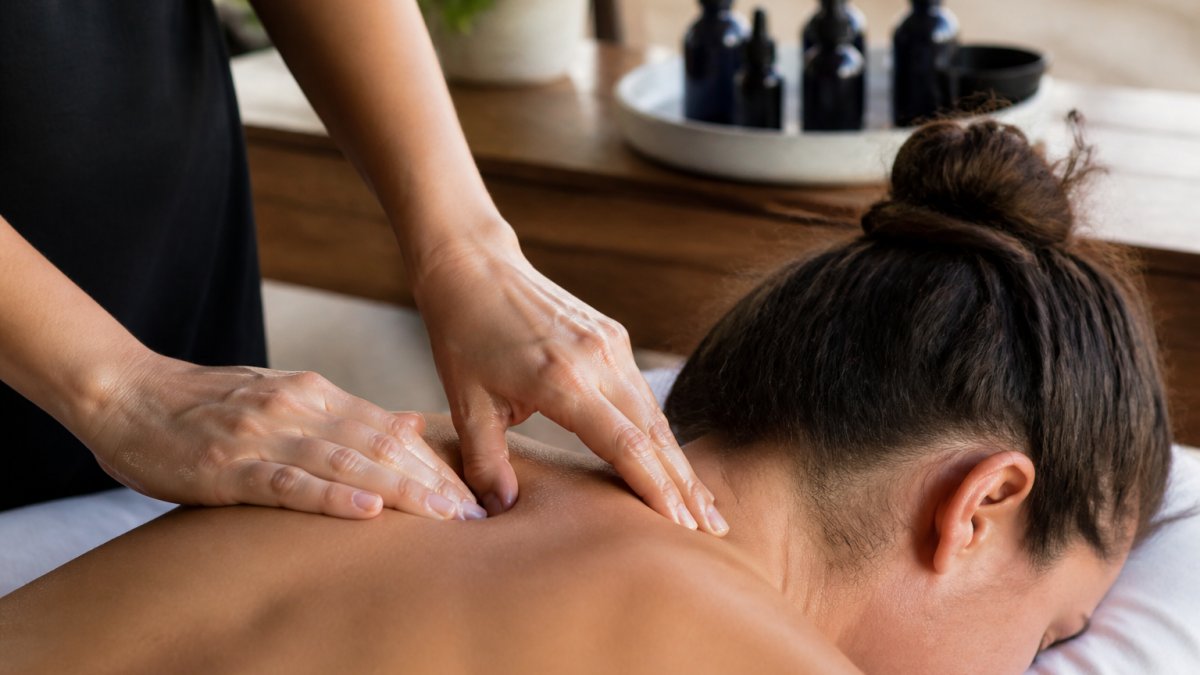
Preparation and Safety Checks
Start by testing for sensitivity. Apply a small amount of your diluted blend to the inside of your wrist.
Check that your skin is clean and dry. Wash the area gently with soap and water if needed.
Ensure you're in a comfortable position. Sit or lie down so you can relax during the massage.
Massage Technique and Duration
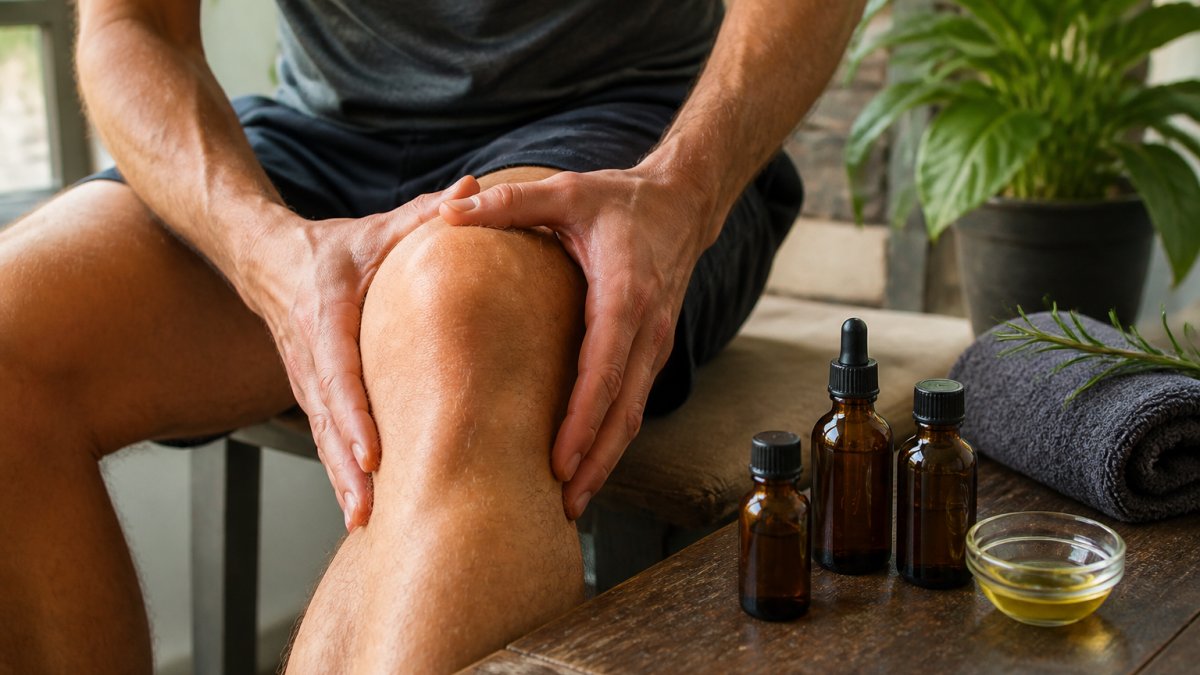
Apply a small amount of your blend to the affected area. Start with a quarter-sized amount.
Use these massage techniques:
Circular motions: Place your fingers or palm on the muscle. Move in slow circles, applying gentle pressure. This warms the area and helps oils absorb.
Kneading: Use your thumbs and fingers to gently squeeze and release the muscle.
Stroking: Use long, smooth strokes along the muscle. Move toward the heart to support circulation.
Massage for 5 to 10 minutes. Slower, intentional movements are more effective than quick rubbing; you should feel relaxed, not irritated.
Repeat once or twice daily as needed. Most people see best results with consistent application over several days.
Safety, Contraindications, and When to Seek Medical Care
Essential oils are concentrated botanical extracts, not benign fragrances. Most adverse reactions are preventable with conservative dilution, patch testing, and a clear-eyed look at who should avoid certain oils. This section separates common-sense caution from genuine contraindications and gives a practical triage for when muscle pain needs a clinician rather than a massage blend.
Who Should Avoid or Modify Essential Oil Use
- Pregnancy and breastfeeding: Some oils are traditionally avoided during pregnancy, and evidence is limited. Peppermint, rosemary, and clary sage are common examples of oils people are advised to discuss with an obstetric clinician before use. Do not apply essential oils to the abdomen or breasts during pregnancy without medical guidance.
- Children: Young children have thinner skin and a higher surface-area-to-weight ratio. Avoid peppermint and eucalyptus near the face of children under 6 because of the risk of laryngospasm from menthol and 1,8-cineole. Keep all bottles out of reach.
- Asthma and fragrance sensitivity: Diffused or strongly scented oils can trigger bronchospasm or headache in sensitive individuals. Use in a ventilated space and stop if coughing, wheezing, or headache develops.
Medication and Interaction Considerations
Topical essential oils are absorbed in small amounts, but interactions are plausible for people on narrow-therapeutic-index medications. Clinicians commonly advise caution with:
- Blood thinners (anticoagulants): Some oils, including wintergreen and birch, contain methyl salicylate, which is structurally related to aspirin (Volatile Constituent Analysis of Wintergreen Essential Oil and Comparison with Synthetic...). Avoid combining them with anticoagulants without medical advice.
- Heart and blood-pressure medications: Warming oils can increase local blood flow; discuss with a clinician if you have cardiovascular disease.
- Diabetes medications: Skin reactions and absorption can vary; monitor and patch test.
Phototoxic Oils and Sun Exposure
Cold-pressed citrus oils (bergamot, lime, lemon, grapefruit) and a few others contain furanocoumarins that make skin more sensitive to ultraviolet light (A study of the phototoxicity of lemon oil). Applied to skin and then exposed to sun, they can cause a phytophotodermatitis reaction, redness, blistering, and dark streaks that can last weeks.
Red Flags: When Muscle Pain Needs Medical Assessment
Most exercise-related soreness improves within 3-5 days. Seek prompt medical care if any of the following appear:
- Severe, sudden, or unexplained pain, especially after a fall or blow
- Visible swelling, bruising, or deformity
- Weakness, numbness, tingling, or loss of range of motion
Evidence Context: What Oils Can and Cannot Do
Essential oils are best understood as comfort and sensory support, not treatment. Menthol from peppermint creates a cooling sensation by activating TRPM8 cold receptors; warming oils like ginger and black pepper create a mild counter-irritant sensation. These effects are real and temporary, typically 20-60 minutes. They do not repair tissue, meaningfully reduce inflammation, or replace diagnosis and established care for injury.
Frequently Asked Questions
How do you dilute essential oils for a muscle massage?
Mix essential oils with a carrier oil at a safe concentration. For adults, use 2-3 drops of essential oil per teaspoon (5 mL) of carrier oil. For larger massage areas, dilute 12-15 drops of essential oil in 1 ounce (30 mL) of carrier oil. Always patch-test on a small area first. Never apply undiluted essential oils directly to skin, as they can cause irritation or sensitivity.
Which essential oils work best for muscle soreness?
Peppermint oil provides a cooling sensation ideal for post-workout soreness, while black pepper, ginger, and marjoram oils offer warming effects for muscle tension and cramps. Eucalyptus, rosemary, and lavender also support muscle discomfort relief. Blend 2-3 oils together for enhanced results, or use them individually depending on whether you prefer cooling or warming sensations.
Are essential oils safe to apply to sore muscles?
Diluted essential oils are generally safe for topical use on sore muscles when applied correctly. Always dilute with a carrier oil, avoid broken or irritated skin, and never use on children under 12 without consulting a pediatrician. Some oils interact with medications or may trigger sensitivities. Pregnant or nursing individuals should consult a healthcare provider before use. Discontinue use if irritation develops.
How long should you massage sore muscles with essential oils?
Massage the affected area for 5-10 minutes using gentle, circular motions. For larger muscle groups like the back or legs, extend to 10-15 minutes. Repeat 1-2 times daily as needed for muscle relief. Allow the oil to absorb for several minutes before dressing. If soreness persists beyond a few days or worsens, consult a healthcare provider to rule out underlying injury.