 how-to
How to Soothe Chronic Dry Skin: 7 Simple Steps
Table of Contents
- Step 1: Identify the Causes of Persistent Dry Skin
- Step 2: Build a Daily Dry Skin Routine That Sticks
- Step 3: Choose the Best Moisturizer for Dry Sensitive Skin
- Step 4: How to Relieve Dry Itchy Skin Without Scratching
- Step 5: Adjust Bathing, Cleansing, and Home Humidity
- Step 6: Natural Remedies and Home Care for Itchy, Flaking Skin
- Step 7: Track Progress and Know When to See a Dermatologist
- Conclusion: How to Soothe Chronic Dry Skin for Good
- Frequently Asked Questions
Last Updated: October 4, 2026
Step 1: Identify the Causes of Persistent Dry Skin
Persistent dry skin almost always has a trigger you can name, and finding it matters more than buying another cream.
At Keith Clark Collection, we work with plant-based, small-batch skincare every day, and the pattern is simple: most people treat the symptom and never ask why their skin stays dry.
Dry skin happens when your barrier, a thin outer layer of skin cells and oils, lets water escape faster than it can hold on.
Common Triggers: Winter Air, Hot Showers, and Harsh Soaps
Three triggers cause most cases:
- Winter air and dry climates. Cold air holds little moisture, and indoor heating dries it out further.
- Hot showers and long baths. Hot water strips the oils your barrier needs.
- Harsh soaps. Strong cleansers remove those same oils with every wash.
Other causes include fragranced products, rough fabrics, and age. As skin ages it produces less oil, which is why dryness becomes more common later in life.
When Dry Skin Is a Sign of Something More
Sometimes dry skin points to a condition such as eczema, psoriasis, or contact dermatitis.
Watch for these signs:
- Intense itching that disrupts sleep
- Red, inflamed, or weeping patches
- Cracks that bleed or sting
If you notice any of these, see a dermatologist, who can tell the difference between chronic dry skin and a condition that needs treatment.
Step 2: Build a Daily Dry Skin Routine That Sticks
A dry skin routine works best when you apply it within three minutes of washing, the window when damp skin absorbs the most moisture.
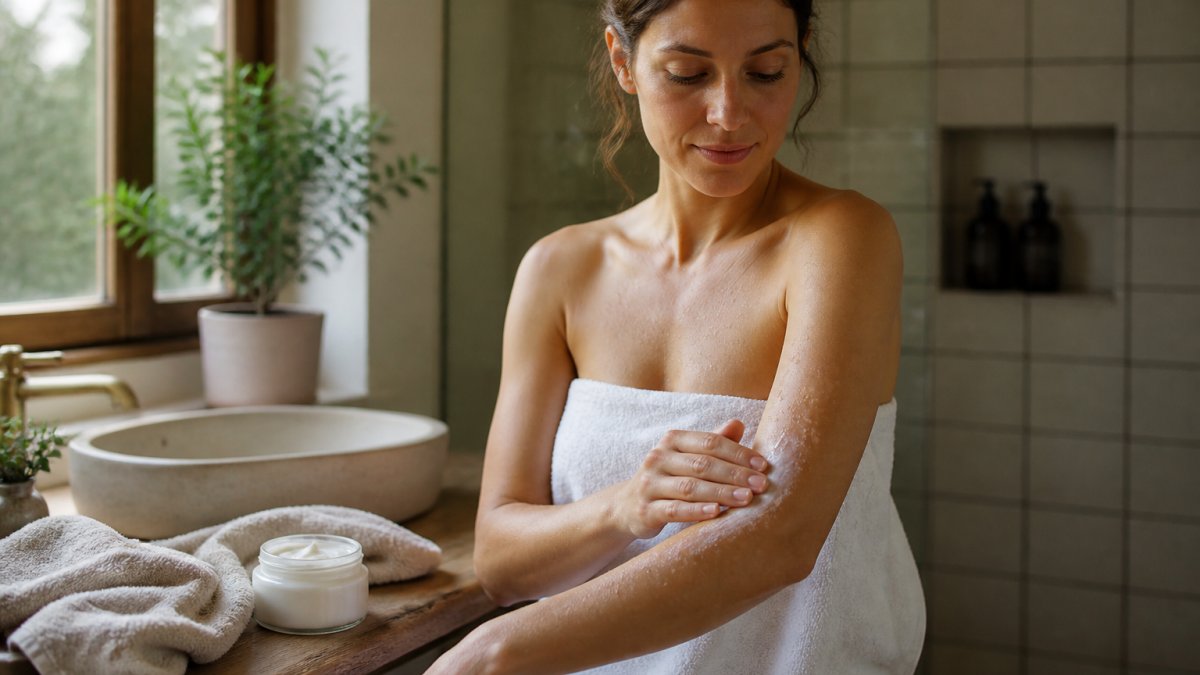
Here is the order that matters most:
- Cleanse with a gentle, fragrance-free cleanser.
- Pat dry and leave skin slightly damp.
- Apply moisturizer while skin is still damp.
- Seal with a thicker cream or ointment on rough areas.
- Repeat morning and night, every day.
Consistency beats intensity: a simple daily routine does more than an elaborate one you skip.
Most people quit because they expect overnight results, but skin needs time to rebuild its barrier. Give any routine at least two weeks.
Step 3: Choose the Best Moisturizer for Dry Sensitive Skin
The best moisturizer for dry sensitive skin is a fragrance-free cream or ointment with ceramides or petroleum jelly; lightweight lotions often are not enough for chronic dryness. The right pick depends on your skin type, the body area, and how severe the dryness is.
Creams and Ointments vs. Lightweight Lotions
Lotions contain more water and evaporate faster. Creams hold more oil and last longer. Ointments seal in moisture best of all.
| Product Type | Water Content | Best For | Body Area |
|---|---|---|---|
| Lotion | High | Mild dryness | Arms, legs |
| Cream | Medium | Daily dry skin | Whole body |
| Ointment | Low | Cracked, severe dryness | Hands, feet, heels |
Match the product to the area. Thick ointments suit hands and feet. Lighter creams work well on the torso.
Match the Product to Skin Type, Area, and Severity
A single product rarely fits every part of your body. Use this framework:
- Oily or combination face, dry body. Use a lightweight, non-comedogenic cream on the face and a richer cream or ointment on the body. Heavy ointments on the face can clog pores and trigger breakouts.
- Sensitive or allergy-prone skin. Choose fragrance-free, dye-free formulas with the shortest ingredient list you can find. Fewer ingredients means fewer chances of a reaction.
- Mature or very dry skin. Look for ceramides, glycerin, and shea or petroleum jelly. These skin types produce less oil, so they need more occlusive (sealing) ingredients.
Ingredients That Help: Ceramides, Hyaluronic Acid, Petroleum Jelly
Certain ingredients do the heavy lifting:
- Ceramides help rebuild the skin barrier.
- Hyaluronic acid draws water into the skin.
- Glycerin pulls moisture from the air and from deeper skin layers.
Look for fragrance-free formulas, since added scents commonly irritate sensitive skin.
Cautions for Sensitive Areas and Allergy-Prone Skin
- Patch test first. Apply a small amount to your inner forearm, cover it, and wait 24 to 48 hours before using it widely.
- Avoid common irritants. Fragrance, essential oils, alcohol, and exfoliating acids (like glycolic or salicylic acid) can sting cracked skin.
- Skip "cooling" or "tingling" products. Menthol, camphor, and peppermint feel soothing but can irritate a broken barrier.
How Much and How Often
Chronic dryness usually needs more than a pea-sized dab. A common approach:
- Face: a nickel-sized amount, morning and night.
- Body: about a teaspoon per limb, or enough to leave a light sheen.
- Hands: after every wash, plus before bed.
Reapply whenever skin feels tight or itchy, not just twice a day. The goal is to keep the barrier coated, not hit a set number of applications.
When a Moisturizer Is Not Enough
If you are using a fragrance-free cream or ointment daily and skin still cracks, bleeds, or itches through the night, the problem may be more than dryness. Persistent symptoms can point to eczema, psoriasis, or contact dermatitis, which need a diagnosis and sometimes prescription treatment. See a dermatologist rather than layering on more products.
Step 4: How to Relieve Dry Itchy Skin Without Scratching
You relieve dry itchy skin by cooling, moisturizing, and covering it. Scratching feels good for a second and makes everything worse.
Try these steps when the itch hits:
- Apply a cold compress for five to ten minutes.
- Press or tap the area instead of scratching.
- Reapply moisturizer right away.
An oatmeal bath or a fragrance-free colloidal oatmeal cream can calm widespread itching.
If itching keeps you awake or comes with a rash, that is a signal to get medical advice.
Step 5: Adjust Bathing, Cleansing, and Home Humidity
Shorter, cooler baths protect your skin barrier. Aim for five to ten minutes in lukewarm water, not hot.
Change these habits:
- Limit baths and showers to once a day.
- Use a mild, non-alkaline cleanser.
- Skip bubble baths and scented salts.
Dry winter air pulls moisture from your skin all day, and a humidifier adds it back, most helpful in cold weather and dry climates.
Step 6: Natural Remedies and Home Care for Itchy, Flaking Skin
Natural remedies can help, but not all are equal: some soothe flaking and rough skin, others irritate it. Know which have real support, which are unproven, and how to test anything new safely.
Options With Reasonable Support
These are widely used and generally helpful for dry, itchy skin:
- Colloidal oatmeal. Finely ground oat that forms a soothing bath or cream. It is a common ingredient in over-the-counter itch-relief products and is often recommended for eczema-prone skin.
- Petroleum jelly. Not a botanical, but one of the most effective sealants available. It traps moisture and lets cracked skin heal.
- Coconut oil. Moisturizes and has mild antibacterial properties. Best for the body, not the face, if you are acne-prone.
Options That Are Unproven or Risky
Be cautious with these, especially on cracked or broken skin:
- Essential oils (tea tree, lavender, peppermint, eucalyptus). Often marketed as soothing, but they are a common cause of allergic contact dermatitis. Peppermint and eucalyptus can sting cracked skin.
- Apple cider vinegar. Acidic and can burn already-irritated skin. Not recommended for barrier repair.
- Lemon juice or citrus. Can cause burns and photosensitivity, especially in sunlight.
How to Patch Test Safely
Before using any new oil, cream, or remedy on a large area:
- Wash and dry a small patch of skin on your inner forearm.
- Apply a thin layer of the product.
- Cover it with a bandage or leave it open, depending on the product.
- Wait 24 to 48 hours.
- Check for redness, itching, swelling, or bumps.
If you react, stop using it. If not, try a larger area, but start small and watch for delayed reactions over the next few days.
Home Care That Supports Any Remedy
Natural remedies work best alongside the basics:
- Keep baths short and lukewarm. Five to ten minutes, once a day.
- Add colloidal oatmeal to the bath. Follow the package directions, and rinse gently afterward.
- Apply oil or cream to damp skin. Within three minutes of patting dry.
When to Skip Home Remedies and See a Doctor
If dryness persists past a month, spreads, cracks, bleeds, or comes with severe itching that disrupts sleep, home remedies are not enough. A dermatologist can rule out eczema, psoriasis, or another condition and recommend treatment that targets the cause. Natural remedies support a routine but are no substitute for a diagnosis when symptoms persist or worsen.
Step 7: Track Progress and Know When to See a Dermatologist
Most routines show results in two to four weeks. Track what you use and how your skin responds.
Signs you are improving:
- Less flaking and roughness
- Fewer cracks
- Less itching
See a dermatologist if dryness persists past a month, spreads, or comes with severe itching. A doctor can rule out eczema, psoriasis, or another skin condition.
Chronic dry skin differs from eczema: eczema is an inflammatory condition with flares and rashes, while chronic dryness is a barrier problem.
Conclusion: How to Soothe Chronic Dry Skin for Good
Learning how to soothe chronic dry skin comes down to daily habits, not one miracle product. Find your triggers, moisturize damp skin, and protect your barrier every day.
Keith Clark Collection makes this easier with small-batch, plant-based body care created by a licensed massage therapist.
Shop by category at Keith Clark Collection and give your skin the daily care it deserves.
Frequently Asked Questions
What is your body lacking if you have dry skin?
Chronic dry skin often reflects a weakened skin barrier rather than a single nutritional gap. The barrier needs lipids like ceramides and fatty acids to hold moisture in, so when those are depleted, water escapes and skin feels tight, rough, and flaky. Some people also run low on omega-3 fatty acids from diet, which support skin health. A fragrance-free moisturizer with ceramides or petroleum jelly helps replace what's missing on the surface while you address internal factors with a balanced diet and plenty of water.
How often should you moisturize chronic dry skin?
Apply moisturizer at least twice daily, and always within three minutes of stepping out of the bath or shower while skin is still damp. That timing traps water before it evaporates. For very dry or cracked areas like heels, elbows, and hands, reapply whenever skin feels tight, which may mean four or five times a day. Thicker creams and ointments last longer than lotions, so you may need fewer applications. Keep a tube by the sink and one in your bag so moisturizing becomes automatic.
What ingredients should you avoid if you have sensitive, dry skin?
Skip products with fragrance, alcohol, and harsh sulfates, which strip the skin barrier and trigger irritation. Avoid non-alkaline cleansers that leave skin feeling squeaky, since that usually means natural oils are gone. Some people react to essential oils, lanolin, or preservatives like methylisothiazolinone. Patch-test new products on your inner forearm for 48 hours before using them widely. If a product stings or burns on application, stop using it, because that is a sign your skin barrier is compromised and needs gentler care.
When should you see a dermatologist for persistent dry skin?
See a dermatologist if dry skin does not improve after two to four weeks of consistent moisturizing and gentle cleansing, or if you notice cracking that bleeds, oozing, swelling, or severe itching that disrupts sleep. These signs may point to eczema, psoriasis, or a skin infection rather than simple dryness. A dermatologist can confirm whether you have a skin condition that needs prescription treatment. Persistent dryness on the palms, soles, or scalp also deserves a professional look, since those patterns often have specific causes.