 ultimate-guide
Benefits of Therapeutic Botanical Skincare
Table of Contents
- What Therapeutic Botanical Skincare Actually Does for Your Skin
- Natural Skincare for Sensitive Skin: What to Look For
- Plant-Based Skincare Ingredients That Earn Their Place
- Botanical Oils for Skin: Which Ones Suit Which Concerns
- How to Patch Test Skincare Before It Touches Your Face
- How to Choose Therapeutic Botanical Skincare That Fits Your Routine
- Frequently Asked Questions
Last Updated: October 21, 2026
What Therapeutic Botanical Skincare Actually Does for Your Skin
Therapeutic botanical skincare is a plant-based approach to skin health that pairs concentrated botanical extracts with carrier oils and butters to support the skin barrier, calm reactivity, and deliver lasting moisture. At Keith Clark Collection, we formulate every small batch around that principle: therapeutic botanicals, chosen for what they do, not just how they smell.
Here is the honest version most guides skip. A botanical formula cannot "fix" skin in the way a prescription can. What it can do is reduce the daily friction that makes skin look tired: moisture loss, tightness after cleansing, and the low-grade irritation that comes from harsh surfactants and synthetic fragrance. Those three problems drive a surprising share of what people describe as "sensitive" or "reactive" skin.
The benefits of therapeutic botanical skincare come down to four things:
- Barrier support. Plant oils rich in fatty acids help replace lipids that cleansing strips away.
- Moisture retention. Butters and waxes slow water loss through the skin surface.
- Sensory calm. Aromatherapy-led formulas support the emotional side of a routine, which matters more than most brands admit.
- Gentler cleansing. Plant-based surfactants lift oil and debris without the squeaky, stripped feeling.
What most guides get wrong is treating "natural" as a synonym for "safe." Poison ivy is natural. So is lemon juice, and people still put it on their faces and wonder why their skin burns. Botanical skincare earns the word therapeutic only when the ingredients are selected for a documented purpose and the formula is stable enough to deliver them.
Natural Skincare for Sensitive Skin: What to Look For
Natural skincare for sensitive skin should prioritize a short ingredient list, fragrance disclosure, and a lipid-rich base over exfoliating acids or high concentrations of essential oils. Sensitivity is not one condition; it is a set of reactions, and the formula has to respect that.
Start with what to avoid. Denatured alcohol high on the list dries the barrier. Strong essential oils like cinnamon, clove, and peppermint create heat. Physical scrubs with irregular particles cause micro-tears. None of these belong in a first product for reactive skin.
Then look for what actually helps:
- Fatty-acid-rich oils such as jojoba, sweet almond, or sunflower, which sit close to the skin's own sebum.
- Colloidal oatmeal or calendula, traditionally used to soothe itch and redness.
- Glycerin, a humectant that pulls water into the upper layers.
- A preservative system you can identify. Water-based products need preservation; a "preservative-free" cream is a bacterial risk, not a virtue.
If a product lists dozens of botanical extracts at the end of the ingredient list, treat that as marketing rather than therapy. Extracts at trace levels do little. One or two well-chosen botanicals at meaningful concentrations outperform a long, decorative list.
Plant-Based Skincare Ingredients That Earn Their Place
Plant-based skincare ingredients are the backbone of any botanical formula, and a handful of them do most of the real work. We would rather build a product around five ingredients that perform than twenty that sound good on a label.
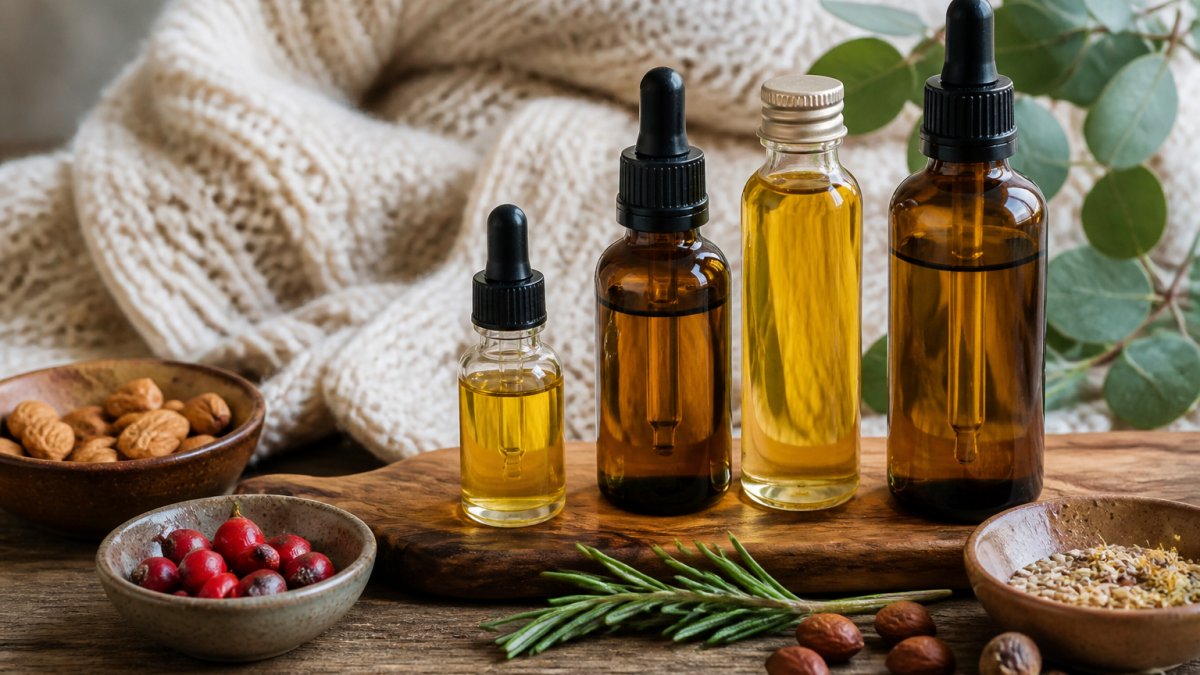
Jojoba oil is technically a liquid wax ester, and its structure closely resembles human sebum. That is why it absorbs without a greasy film and suits both dry and oily skin.
Shea butter is rich in stearic and oleic acids and forms a breathable seal over the skin. It is the workhorse of body care for a reason: it holds moisture through a long day and through winter.
Calendula has a long history in soothing preparations for chapped and irritated skin. It pairs well with oat and works best in oil-based formulas where its compounds stay stable.
Sunflower seed oil is high in linoleic acid, which supports the barrier and is well tolerated by most skin types. It is also one of the more affordable oils, which makes it a smart base.
Lavender and chamomile carry the aromatherapy side of the equation. Their value is partly sensory, and that is not a weakness. A routine you look forward to is a routine you keep.
Botanical Oils for Skin: Which Ones Suit Which Concerns
Botanical oils for skin are not interchangeable. Match the oil to the concern and you get results; use the wrong one and you get clogged pores or a greasy finish.
| Concern | Botanical to Try | Why It Fits |
|---|---|---|
| Dry, tight skin | Shea butter, avocado oil | Rich in fatty acids, seals in moisture |
| Oily but dehydrated | Jojoba, sunflower | Mimics sebum, absorbs cleanly |
| Redness and reactivity | Calendula, oat oil | Traditionally used to soothe |
| Dull, tired texture | Rosehip, sea buckthorn | Supports renewal over time |
| Body aches and stiffness | Arnica-infused oil, lavender | Used in massage for comfort |
A word on the last row. Oils used for muscle and joint comfort work best with massage, not just application. Warm a few drops between your palms, work them into the area with steady pressure, and give it a few minutes. The mechanical action of massage and the botanical blend reinforce each other, which is exactly why our formulas are built by a licensed massage therapist rather than a fragrance house.
For facial use, apply oils to damp skin after cleansing. Oil on dry skin sits on top; oil on damp skin spreads further and locks in the water already there.
How to Patch Test Skincare Before It Touches Your Face
How to patch test skincare is simple: apply a small amount to a discreet area, wait, and watch for a reaction before committing to full use. Patch testing is the single most useful habit in a sensitive-skin routine, and almost nobody does it properly.
Here is the method we recommend:
- Wash and dry the inner forearm or the side of the neck.
- Apply a pea-sized amount of the product to a small area, roughly the size of a coin.
- Leave it uncovered and undisturbed for 24 hours.
- Check for redness, itching, swelling, or heat at the site.
- If clear, repeat on the same spot for two more days.
- If still clear, test a small patch at the jawline before using it on the full face.
Most reactions show up within 24 to 48 hours, but some develop more slowly. Three days is a reasonable window. If you react, stop and wash the area with cool water. Do not try to "push through" irritation; that is how a small reaction becomes a week of recovery.
How to Choose Therapeutic Botanical Skincare That Fits Your Routine
Choosing therapeutic botanical skincare comes down to matching the formula to your skin, your climate, and the routine you will actually keep. A perfect product you never reach for is worth nothing.
Work through this checklist before you buy:
- Identify your main concern. Dryness, reactivity, dullness, or body comfort. Pick one to start.
- Read the full ingredient list. Look for recognizable botanicals high on the list and note any fragrance or essential oils.
- Check the format. Oils and balms suit dry skin and cold weather; lotions and gels suit humid conditions and oily skin.
- Confirm who makes it and how. Small-batch production and a named maker tell you more about consistency than a long list of certifications.
- Ask about the preservative system. Any water-containing product needs one.
- Patch test before full use. Every time.
A common mistake is buying a full routine at once. Buy one product, use it for two weeks, and see how your skin responds. Then build from there. Your routine should be three or four steps you can do half-asleep, not a twelve-step ritual you abandon by Thursday.
The hardest part of switching to botanical skincare is not finding a product. It is trusting that a small-batch formula will be consistent enough to rely on. That is a fair concern, and it is why Keith Clark Collection makes every product in small batches by a licensed massage therapist, using plant-based ingredients and therapeutic botanicals selected for a purpose. Our aromatherapy-powered formulas support calm, clarity, and comfort while delivering the deep moisture and silky finish your skin actually needs. Shop by category and start with one product, tested on your own skin, on your own schedule.
Frequently Asked Questions
What is therapeutic botanical skincare?
Therapeutic botanical skincare refers to products built around plant-derived ingredients chosen for a specific effect on the skin, such as calming redness, restoring moisture, or easing tightness after cleansing. The word therapeutic signals intent: the botanicals are there to do a job, not just to make the label sound natural. In practice, that means short ingredient lists, recognizable plant oils and extracts, and formulas made in small batches so the plant material stays fresh. Keith Clark Collection builds its line this way, with aromatherapy-powered formulations made by a licensed massage therapist.
Can botanical skincare help sensitive skin?
It can, provided you choose formulas with fewer ingredients and no added fragrance beyond the essential oils themselves. Sensitive skin reacts to length and complexity as much as to any single ingredient, so a short list of plant-based skincare ingredients is easier to tolerate than a long one. Start with one product at a time, patch test first, and give each new item two weeks before adding another. If your skin stings, burns, or breaks out in hives, stop using it and speak with a dermatologist.
How do I patch test a new botanical skincare product?
Apply a small amount to the inner forearm or behind the ear, cover it lightly, and leave it for 24 to 48 hours without washing the area. Check for redness, itching, swelling, or heat. If nothing appears, repeat on a small patch of jawline skin for another two days before using it on your full face. Patch testing skincare matters most with botanical oils for skin, since plant oils vary by harvest and a formula you tolerated last season may behave differently in a new batch.
Are botanical skincare products safe for all skin types?
No single formula suits every skin type, and any brand claiming otherwise is overselling. Very reactive skin, skin with active eczema, and skin recovering from a procedure need a dermatologist's input before you introduce new plant oils. Children's skin is thinner and absorbs more, so test on a small area first and avoid essential-oil-heavy products on young children. For most adults, the practical rule is the same: patch test, introduce one product at a time, and stop at the first sign of irritation.